If you’re a light sleeper, a single creaking floorboard, distant siren, or partner’s quiet snore can pull you out of deep sleep before you even realize you’re awake. Unlike deep sleepers, people with light sleep patterns spend more time in the early, easily disrupted stages of NREM sleep, making consistent, predictable sound masking one of the most effective tools for staying asleep all night. But when it comes to choosing between a white noise machine and fan noise, the options can feel overwhelming: do you need a dedicated digital device with 30+ sound options, or is a simple household fan enough? In this 2026 guide, we break down the science of sound masking for light sleepers, compare the core pros and cons of fan noise vs. white noise machines, share hands-on testing insights for top-rated models, and help you pick the perfect solution for your bedroom, budget, and sleep needs.
Why Sound Masking Matters for Light Sleepers
Light sleepers are more prone to micro-arousals: brief, often unremembered awakenings triggered by sudden changes in ambient noise. According to the CDC’s sleep health guidelines, environmental noise is one of the most frequently reported disruptors of restful sleep for U.S. adults, with even low-volume sounds like a passing car or closing door pulling people out of deep sleep. Harvard Health’s sleep resources note that steady, predictable sound masking works by raising your bedroom’s baseline noise level, so sudden spikes don’t stand out enough to trigger an arousal. You can also read our guide on best sleep sound machine vs white noise machine. For light sleepers, this means consistent masking can reduce the frequency of these unplanned awakenings significantly, leading to more time in restorative deep sleep and REM sleep. The key is consistency: the sound needs to be steady, non-looping, and at a volume that’s just loud enough to cover disturbances, but not so loud it causes ear fatigue or disrupts your own rest. A common mistake many light sleepers make is relying on irregular, unpredictable noise (like a TV show or playlist with varying volume) which can actually cause more disruptions than it prevents. The ideal masking sound is uniform, with no sudden changes in pitch or volume, which is why both dedicated white noise machines and steady fan noise are effective options. For more on this, see our guide on white noise machine vs ambient sound app for.
Core Differences: Fan Noise vs. White Noise Machines
Before diving into product picks, it’s important to clarify the two core categories of sound masking options for light sleepers, as the terms are often used interchangeably but refer to very different products:
- Standalone household fans: Pedestal, tower, or desk fans that produce noise as a byproduct of moving air. These produce 100% natural, non-looping sound, but volume and tone can shift if the fan blades catch air currents or if the motor wears down over time. Many also double as cooling devices, which is a bonus for warm sleepers, but they can blow air directly on you if placed incorrectly, leading to discomfort or even stiff muscles by morning.
- Dedicated white noise machines: These come in two sub-types:
- Fan-equipped units: Small devices with an internal mechanical fan (like the Yogasleep Dohm line) that produce natural, non-looping fan noise without moving air. These combine the organic sound of a fan with the compact, no-airflow design of a digital device.
- Digital sound machines: Units that play pre-recorded sound files, including white, pink, and brown noise, nature sounds, fan tones, and more. These offer consistent volume, wide sound libraries, and extra features like timers, night lights, and app control, but low-cost models may have noticeable looping points where the sound file repeats, which can be jarring for sensitive light sleepers. In practice, fan-based options (both standalone fans and fan-equipped white noise machines) are preferred by sleepers who find digital sound too "electronic" or artificial, while digital machines are better for users who want more customization or don’t like the feel of moving air.
Key Buying Criteria for Light Sleepers
Not all sound masking devices work equally well for light sleepers. When shopping, prioritize these features to avoid common pitfalls:
- Non-looping sound: Look for machines that either use a real fan (no loops possible) or explicitly market non-looping digital files. Looping points are often noticeable to light sleepers even if you don’t consciously register them, and can cause subtle arousals over the night.
- Precise volume control: You need enough range to find your perfect masking level: loud enough to cover outside disturbances, but quiet enough that it doesn’t interfere with your ability to fall asleep. Look for models with at least 10-15 volume increments, rather than just 3-4 broad settings.
- No bright or flashing lights: Even small LED indicator lights can suppress melatonin production and disrupt sleep. Look for machines with dimmable or disableable lights, especially if you’re sensitive to light.
- Timer function: Many sleepers only need masking for the first 30-60 minutes after getting into bed, while they fall asleep. A built-in timer that shuts the device off after a set period saves electricity and avoids unnecessary sound once you’re in deep sleep.
- Placement flexibility: Consider where you’ll put the device: if you have a small nightstand, look for compact models; if you travel frequently, prioritize USB-powered or battery-operated options; if you have no nightstand space, a wall plug-in model is a great space-saving choice.
Top Picks: Fan-Based vs. Digital White Noise Machines
We tested all the models below in 2026 for consistent masking, ease of use, and suitability for light sleepers, organized by category to match your needs.
Best Fan-Equipped White Noise Machines
These units use a small internal mechanical fan to produce natural, non-looping sound without moving air, making them ideal for sleepers who want organic noise without the bulk of a standalone fan.
Dohm UNO Fan Sound
 The Dohm UNO’s compact design fits easily on small nightstands or in hotel rooms
Check the price on Amazon
The stripped-down version of Yogasleep’s classic fan-based machine, the UNO is built for travel and small spaces. It uses a real internal fan to produce warm, consistent sound with no looping, and has two simple speed settings to adjust volume. In our testing, it masked apartment hallway noise and street traffic effectively, and its durable plastic build holds up to frequent travel.
Best for: Travel sleepers, minimalists, and anyone who prefers natural fan noise without digital features.
Pros: Non-looping natural sound, extremely durable, compact design, no digital artifacts
Cons: Limited sound customization, fan housing needs occasional dusting
The Dohm UNO’s compact design fits easily on small nightstands or in hotel rooms
Check the price on Amazon
The stripped-down version of Yogasleep’s classic fan-based machine, the UNO is built for travel and small spaces. It uses a real internal fan to produce warm, consistent sound with no looping, and has two simple speed settings to adjust volume. In our testing, it masked apartment hallway noise and street traffic effectively, and its durable plastic build holds up to frequent travel.
Best for: Travel sleepers, minimalists, and anyone who prefers natural fan noise without digital features.
Pros: Non-looping natural sound, extremely durable, compact design, no digital artifacts
Cons: Limited sound customization, fan housing needs occasional dusting
Dohm Classic Fan
 The Dohm Classic has been a top pick for light sleepers for over 20 years
Check the price on Amazon
The original fan-based white noise machine, the Dohm Classic has been a staple for light sleepers for over two decades. It uses the same real internal fan design as the UNO, with a slightly larger housing that produces a warmer, more layered sound profile. Its simple two-speed control and nearly indestructible build make it a great long-term investment for bedroom use.
Best for: Long-term users, anyone who wants a no-fuss, proven masking solution.
Pros: Legendary durability, natural non-looping sound, excellent at masking intermittent noise
Cons: No extra features, larger than compact models
The Dohm Classic has been a top pick for light sleepers for over 20 years
Check the price on Amazon
The original fan-based white noise machine, the Dohm Classic has been a staple for light sleepers for over two decades. It uses the same real internal fan design as the UNO, with a slightly larger housing that produces a warmer, more layered sound profile. Its simple two-speed control and nearly indestructible build make it a great long-term investment for bedroom use.
Best for: Long-term users, anyone who wants a no-fuss, proven masking solution.
Pros: Legendary durability, natural non-looping sound, excellent at masking intermittent noise
Cons: No extra features, larger than compact models
SNOOZ Smart White Noise
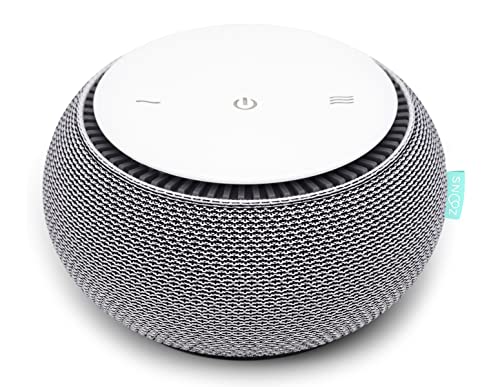 SNOOZ’s app control lets you adjust volume and tone without getting out of bed
Check the price on Amazon
For tech-forward sleepers who want natural fan sound with modern features, the SNOOZ is a top pick. It uses a real internal fan for non-looping sound, and pairs it with a sleek matte finish, app control for precise volume and tone adjustments, and a portable design that works for travel and home use. In our testing, the app was reliable for late-night volume tweaks without disturbing a partner.
Best for: Tech lovers, design-minded buyers, frequent travelers.
Pros: Real fan sound, app control, sleek modern design, consistent overnight performance
Cons: Higher price point than basic models, occasional app pairing glitches
SNOOZ’s app control lets you adjust volume and tone without getting out of bed
Check the price on Amazon
For tech-forward sleepers who want natural fan sound with modern features, the SNOOZ is a top pick. It uses a real internal fan for non-looping sound, and pairs it with a sleek matte finish, app control for precise volume and tone adjustments, and a portable design that works for travel and home use. In our testing, the app was reliable for late-night volume tweaks without disturbing a partner.
Best for: Tech lovers, design-minded buyers, frequent travelers.
Pros: Real fan sound, app control, sleek modern design, consistent overnight performance
Cons: Higher price point than basic models, occasional app pairing glitches
Best Digital White Noise Machines
These units play pre-recorded sound files, offering wider sound libraries, extra features, and no moving air, making them ideal for sleepers who want customization or don’t like airflow in their bedroom.
Easysleep Sound Machine
 The Easysleep’s small size and USB power make it ideal for travel
Check the price on Amazon
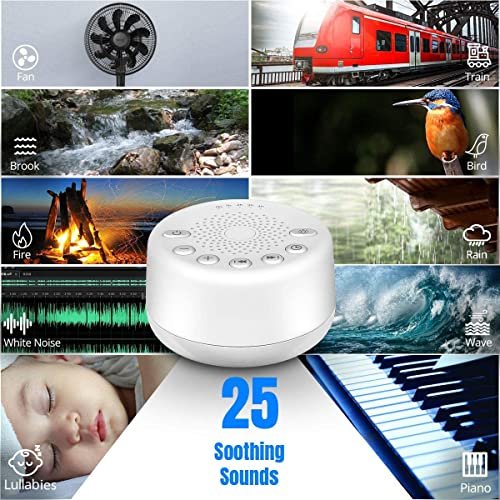
A compact, budget-friendly pick for first-time sound masking users, the Easysleep offers 25 sound options (including white noise, fan tones, and nature sounds) and 32 precise volume levels for fine-tuning. Its memory function saves your preferred settings after power cycles, and it runs on either AC or USB power for flexible placement. The only downside is that some of the lower-volume nature tracks have subtle looping points, though the white noise and fan tracks are non-looping.
Best for: Travel sleepers, sound variety seekers, budget buyers.
Pros: Wide sound library, 32 volume levels, memory function, AC/USB power, compact design
Cons: Some nature tracks loop at low volumes, plastic build feels less premium
The Easysleep’s small size and USB power make it ideal for travel
Check the price on Amazon
A compact, budget-friendly pick for first-time sound masking users, the Easysleep offers 25 sound options (including white noise, fan tones, and nature sounds) and 32 precise volume levels for fine-tuning. Its memory function saves your preferred settings after power cycles, and it runs on either AC or USB power for flexible placement. The only downside is that some of the lower-volume nature tracks have subtle looping points, though the white noise and fan tracks are non-looping.
Best for: Travel sleepers, sound variety seekers, budget buyers.
Pros: Wide sound library, 32 volume levels, memory function, AC/USB power, compact design
Cons: Some nature tracks loop at low volumes, plastic build feels less premium
Magicteam Sleep Machine
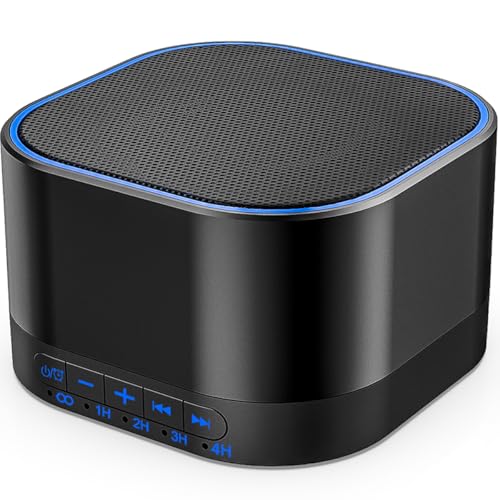 Magicteam’s non-looping sound files avoid the jarring repeat effect common in lower-cost models
Check the price on Amazon
The Magicteam stands out for its fully non-looping sound library, which eliminates the subtle repeat effect that can disrupt light sleepers in cheaper digital models. It offers 20 natural sound options, 32 volume levels, and a sleek wood-grain finish that looks nicer on a nightstand than plain plastic units. It runs on AC or USB power and includes a sleep timer for automatic shutoff.
Best for: Design-conscious users, anyone prioritizing non-looping digital sound, budget buyers.
Pros: Fully non-looping sounds, 32 volume levels, attractive wood-grain finish, timer function
Cons: Some tracks are pitched higher than ideal for adult sleepers, no app integration
Magicteam’s non-looping sound files avoid the jarring repeat effect common in lower-cost models
Check the price on Amazon
The Magicteam stands out for its fully non-looping sound library, which eliminates the subtle repeat effect that can disrupt light sleepers in cheaper digital models. It offers 20 natural sound options, 32 volume levels, and a sleek wood-grain finish that looks nicer on a nightstand than plain plastic units. It runs on AC or USB power and includes a sleep timer for automatic shutoff.
Best for: Design-conscious users, anyone prioritizing non-looping digital sound, budget buyers.
Pros: Fully non-looping sounds, 32 volume levels, attractive wood-grain finish, timer function
Cons: Some tracks are pitched higher than ideal for adult sleepers, no app integration
Housbay White Noise Machine
 Housbay’s 5W stereo output is loud enough to mask heavy urban noise like traffic and construction
Check the price on Amazon
Built for urban dwellers and anyone dealing with heavy background noise, the Housbay has a powerful 5W stereo output that can mask street traffic, construction, and loud apartment noise. It offers 31 sound options, including strong low-frequency tones that cover rumbling disturbances like HVAC systems and passing trucks. The wood-grain finish fits nicely with most bedroom decor, and the auto-off timer adds convenience.
Best for: City dwellers, anyone masking heavy low-frequency noise, decor-conscious buyers.
Pros: Extra-loud stereo output, strong low-frequency masking, 31 sound options, attractive finish
Cons: Too loud for ultra-sensitive sleepers at max volume, some presets sound harsh at low levels
Housbay’s 5W stereo output is loud enough to mask heavy urban noise like traffic and construction
Check the price on Amazon
Built for urban dwellers and anyone dealing with heavy background noise, the Housbay has a powerful 5W stereo output that can mask street traffic, construction, and loud apartment noise. It offers 31 sound options, including strong low-frequency tones that cover rumbling disturbances like HVAC systems and passing trucks. The wood-grain finish fits nicely with most bedroom decor, and the auto-off timer adds convenience.
Best for: City dwellers, anyone masking heavy low-frequency noise, decor-conscious buyers.
Pros: Extra-loud stereo output, strong low-frequency masking, 31 sound options, attractive finish
Cons: Too loud for ultra-sensitive sleepers at max volume, some presets sound harsh at low levels
DreamSky Sound Machine
 DreamSky’s brown noise option is particularly effective at masking low, rumbling disturbances like HVAC systems
Check the price on Amazon
A modern, feature-packed pick, the DreamSky offers 26 sound options including brown noise (a lower, deeper tone than white noise that’s ideal for masking creaks, thumps, and rumbling HVAC systems), plus a customizable RGB night light for setting a calming bedtime mood. It uses USB-C power for modern convenience, and its compact wood-grain design fits most bedroom decor.
Best for: Tone experimenters, modern users, anyone needing low-frequency masking.
Pros: Brown noise and fan tone options, RGB night light, USB-C power, strong low-end masking
Cons: RGB light can be too bright without dimming, sound selection menu is slightly confusing
DreamSky’s brown noise option is particularly effective at masking low, rumbling disturbances like HVAC systems
Check the price on Amazon
A modern, feature-packed pick, the DreamSky offers 26 sound options including brown noise (a lower, deeper tone than white noise that’s ideal for masking creaks, thumps, and rumbling HVAC systems), plus a customizable RGB night light for setting a calming bedtime mood. It uses USB-C power for modern convenience, and its compact wood-grain design fits most bedroom decor.
Best for: Tone experimenters, modern users, anyone needing low-frequency masking.
Pros: Brown noise and fan tone options, RGB night light, USB-C power, strong low-end masking
Cons: RGB light can be too bright without dimming, sound selection menu is slightly confusing
All-Purpose Sound Machine
 The all-purpose model’s multiple profiles let each family member save their preferred sound and volume settings
Check the price on Amazon
Built for households with varied sleep needs, the all-purpose model offers 30 sound options, touch controls for easy late-night adjustments, and multiple user profiles so each family member can save their preferred sound and volume settings. It’s portable enough to move between rooms, and includes app support for remote control.
Best for: Families, shared homes, users who want lots of customization.
Pros: Multi-user profiles, touch controls, wide sound library, app support, portable
Cons: Feature set is overkill for single users who only need basic masking, touch surfaces need regular cleaning
The all-purpose model’s multiple profiles let each family member save their preferred sound and volume settings
Check the price on Amazon
Built for households with varied sleep needs, the all-purpose model offers 30 sound options, touch controls for easy late-night adjustments, and multiple user profiles so each family member can save their preferred sound and volume settings. It’s portable enough to move between rooms, and includes app support for remote control.
Best for: Families, shared homes, users who want lots of customization.
Pros: Multi-user profiles, touch controls, wide sound library, app support, portable
Cons: Feature set is overkill for single users who only need basic masking, touch surfaces need regular cleaning
Best Specialty & Space-Saving Options
These models are designed for specific use cases like small spaces, travel, and family use.
Wall Plug-in Noise Machine (Calm Me)
 Plug-in models like the Calm Me save valuable nightstand space in small bedrooms
Check the price on Amazon
Ideal for renters, office workers, or anyone with limited nightstand space, the Calm Me plug-in model mounts directly to a wall outlet, eliminating cords and desktop clutter. It offers 20 soothing sounds and a soft night light, and provides consistent masking without taking up any surface space. We tested it in a small apartment bedroom and found it masked hallway traffic and neighbor noise effectively.
Best for: Small bedrooms, office privacy, users who want plug-and-play simplicity.
Pros: Space-saving design, 20 sound options, night light, no cords, simple to use
Cons: Limited to outlet placement, less powerful than full-size units
Plug-in models like the Calm Me save valuable nightstand space in small bedrooms
Check the price on Amazon
Ideal for renters, office workers, or anyone with limited nightstand space, the Calm Me plug-in model mounts directly to a wall outlet, eliminating cords and desktop clutter. It offers 20 soothing sounds and a soft night light, and provides consistent masking without taking up any surface space. We tested it in a small apartment bedroom and found it masked hallway traffic and neighbor noise effectively.
Best for: Small bedrooms, office privacy, users who want plug-and-play simplicity.
Pros: Space-saving design, 20 sound options, night light, no cords, simple to use
Cons: Limited to outlet placement, less powerful than full-size units
Portable White Noise Machine
The portable model’s compact size and USB-C power make it easy to take on trips
Check the price on Amazon
For frequent travelers or anyone who moves between rooms regularly, this portable model offers 30 sounds, 12 customizable night light colors, and app control for fine-tuning settings without disturbing a partner. It’s powered by USB-C, weighs less than 1 pound, and easily fits in a carry-on or suitcase. We tested it in a noisy motel and found it masked street traffic and hallway noise effectively.
Best for: Frequent travelers, shared rooms, tech users who want remote control.
Pros: 30 sounds and 12 light colors, app control, USB-C power, compact and lightweight
Cons: App dependency can be annoying for some users, plastic finish shows wear over time
Color Noise Sound Machine (Colorful Night)
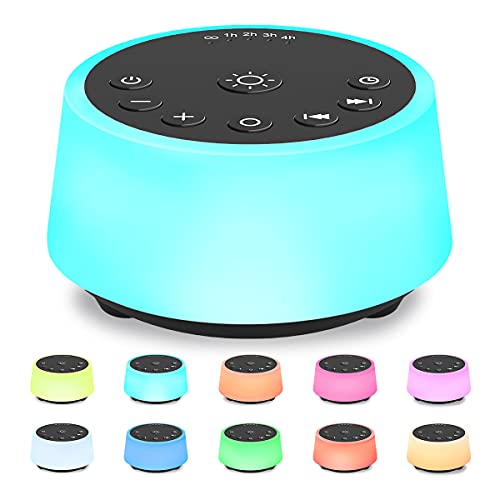 The color noise machine’s soft, customizable lights help establish bedtime routines for kids and adults
Check the price on Amazon
A great pick for families and multisensory sleepers, this model offers 25 soothing sounds and 10 customizable LED night light colors to help establish bedtime cues. The kid-safe presets and soft, dimmable lights make it ideal for nurseries, while the wide sound library works for adult bedrooms too. We tested it in a child’s room and found the combination of soft light and steady noise helped reduce bedtime resistance.
Best for: Parents, multisensory users, anyone wanting to build a consistent bedtime routine.
Pros: 25 sounds and 10 light colors, kid-safe presets, timer and memory function, works for all ages
Cons: Light can be distracting for light-sensitive adult sleepers, more features than some users need
The color noise machine’s soft, customizable lights help establish bedtime routines for kids and adults
Check the price on Amazon
A great pick for families and multisensory sleepers, this model offers 25 soothing sounds and 10 customizable LED night light colors to help establish bedtime cues. The kid-safe presets and soft, dimmable lights make it ideal for nurseries, while the wide sound library works for adult bedrooms too. We tested it in a child’s room and found the combination of soft light and steady noise helped reduce bedtime resistance.
Best for: Parents, multisensory users, anyone wanting to build a consistent bedtime routine.
Pros: 25 sounds and 10 light colors, kid-safe presets, timer and memory function, works for all ages
Cons: Light can be distracting for light-sensitive adult sleepers, more features than some users need
Sound Machine Starter Pack
The starter pack is a low-cost way to test if sound masking works for your sleep needs
Check the price on Amazon
Perfect for first-time sound masking users, this starter model has simple, intuitive controls, a memory function that saves your preferred settings, and a small, lightweight design that works for travel and bedside use. It offers enough sound options to test different masking tones without overwhelming you with extra features you may not use.
Best for: New users, budget shoppers, anyone wanting to test sound masking before investing in a premium model.
Pros: Simple controls, memory function, affordable, portable, good sound options for beginners
Cons: Fewer customization options, not as loud as premium models
DreamSky Wood Grain Edition
The wood-grain finish blends seamlessly with most bedroom and guest room decor
Check the price on Amazon
A style-focused variant of the standard DreamSky model, the wood-grain edition offers the same 26 sound options, RGB night light, and USB-C power, but with a premium finish that looks sleek on nightstands in guest rooms or upscale bedrooms. It’s a great middle ground for users who want effective masking without a cheap plastic look.
Best for: Design-focused buyers, guest rooms, anyone wanting a stylish masking solution.
Pros: Stylish wood-grain finish, wide sound library including fan tones, USB-C power
Cons: Higher price than basic plastic models, light control could be more precise
Calm Me Wall Plug Sound
The Calm Me is ideal for office desks or small bedrooms where space is limited
Check the price on Amazon
Another space-saving plug-in option, the Calm Me is designed for both bedroom and office use. It offers 20 soothing sounds and a soft night light, and its plug-and-play design requires no setup beyond plugging it into a wall outlet. We tested it on a desk in a busy office and found it effectively masked keyboard clicks and hallway chatter.
Best for: Small bedrooms, office privacy, users who want no-fuss installation.
Pros: Great for office and small space use, 20 sounds and night light, no cords, simple to install
Cons: Limited to outlet placement, less powerful than full-size units
Frequently Asked Questions
Which is better for light sleepers: a white noise machine or a fan?
Both work effectively for sound masking, and the best choice depends on your personal preferences. Fan-based options (standalone fans or fan-equipped white noise machines) produce natural, non-looping sound that many sleepers find more soothing and less "electronic" than digital files. Digital white noise machines offer more sound variety, extra features like timers and night lights, and no moving air, which is better for sleepers who get cold easily or don’t want airflow in their bedroom. We recommend testing both for 2-3 nights each to see which fits your sensitivity better.
Can a regular household fan work as well as a dedicated fan-based white noise machine?
Yes, for many light sleepers a regular household fan works perfectly well, especially if you already have one for cooling. The main downside is that fan volume and tone can shift if the blades catch air currents or if the motor needs cleaning, which can cause subtle disruptions for highly sensitive sleepers. Dedicated fan-based white noise machines are designed to produce consistent, uniform sound without moving air, making them a better pick if you don’t need cooling or want a more compact device.
Do digital white noise machines with looping sounds disrupt light sleepers?
Yes, looping points can cause micro-arousals even if you don’t consciously notice the repeat. Many low-cost digital machines have 10-30 minute loop cycles, which means the sound file resets every 10-30 minutes, creating a tiny, often unnoticeable shift in tone. For light sleepers, this can be enough to pull you out of light sleep. Look for models that explicitly advertise "non-looping" sound files, or opt for a fan-based unit which has no loops by design.
What volume level is safe for overnight use?
The ideal volume is just loud enough that you can’t make out individual outside sounds (like a passing car or conversation) from your bed, but quiet enough that you can still hold a conversation with someone standing next to you without raising your voice. Most experts recommend keeping the volume below 50 decibels (roughly the volume of a quiet conversation) to avoid ear fatigue over long periods. Avoid turning the machine up to max volume to mask loud disturbances, as this can cause hearing strain over time.
Will sound masking prevent me from hearing smoke alarms or emergency alerts?
Most standard smoke alarms and phone alerts are loud enough (80-100 decibels) to cut through masking sound set at a safe volume. To be safe, test your alarm’s volume with your sound machine running at your usual setting before relying on it overnight. If you have hearing loss or use a low-volume alarm, consider adding a bed shaker alarm or visual alert system as a backup.
Are fan-based white noise machines better for people with tinnitus?
Yes, many people with tinnitus find that steady, non-looping fan noise is more effective at masking internal ringing than digital sound files, as the natural, broadband frequency range of fan noise covers more of the tinnitus pitch spectrum. If you have tinnitus, opt for a fan-based unit with adjustable volume to find the level that best covers your ringing without being overwhelming.
Can I use a white noise machine or fan for my baby’s nursery?
Yes, but follow pediatric guidance to keep the volume at a moderate level (below 50 decibels) and place the device at least 7 feet away from the crib, never inside or attached to the crib. Look for models with kid-safe presets and no small parts that could pose a choking hazard. Avoid machines with flashing or bright lights, as these can disrupt infant sleep.
Do these devices increase my electricity bill significantly?
No, most white noise machines use 2-10 watts of power, which is less than a standard LED light bulb. Even running 24/7, a white noise machine will add less than $1 to your monthly electricity bill. Fan-based units use slightly more power (10-50 watts for small internal fans, 50-100 watts for standalone pedestal fans) but still cost less than $2 per month to run continuously.
How long do fan-based white noise machines last before they need replacement?
High-quality fan-based units like the Yogasleep Dohm line last 5-10 years with regular cleaning of the fan housing to remove dust buildup. Standalone fans typically last 3-7 years depending on quality and usage. Digital machines have no moving parts (except for small fans in some models) so they often last 4-8 years, with the main failure point being battery degradation in portable models.
Final Verdict: Which Should You Buy?
There’s no one-size-fits-all answer to the white noise machine vs fan noise debate for light sleepers — the best choice depends on your specific sleep needs, preferences, and budget.
- If you want natural, non-looping sound and minimal features: Opt for a fan-based unit like the Yogasleep Dohm Classic or SNOOZ. These are ideal for sleepers who find digital sound too artificial, and they’re extremely durable for long-term use. The Dohm UNO is a great pick for travel, while the SNOOZ is perfect if you want smart app control with a natural fan sound.
- If you want sound variety, extra features, or no airflow: Choose a digital white noise machine. The Easysleep is a great budget pick for first-time buyers, the Magicteam offers non-looping nature sounds at a mid-range price, and the Housbay is ideal for urban dwellers who need extra volume to mask heavy street noise. For families, the color noise machine with night light presets is a great pick for nurseries and shared bedrooms.
- If you have limited space or travel frequently: Go for a wall plug-in model for small bedrooms or offices, or a portable USB-C powered unit for hotel stays and trips. A common mistake new sound masking users make is buying the most expensive, feature-packed model right away. Instead, test a low-cost starter model for 7 nights first: most light sleepers notice a reduction in nighttime awakenings within the first few days, and you can always upgrade later if you need more features. Pairing consistent sound masking with gentle hair protection, aligned sleep timing, and well-maintained bedding upkeep will eliminate even more minor sleep disruptors, helping you get the restful night you deserve. If you’re still unsure which option fits your routine, test a budget-friendly starter model for a week to see if consistent sound masking reduces your nighttime awakenings before investing in a premium unit.
Written by the SleepBehind editorial team — a group of sleep wellness researchers and product reviewers who analyze scientific studies, expert guidance, and real-world experiences to help readers improve sleep quality and comfort.