Side sleeping is the most preferred sleep position for many adults, but it can aggravate existing shoulder pain from rotator cuff issues, bursitis, overuse, or recent injury. If you’ve been waking up with a sore, stiff shoulder or struggling to get comfortable on your side, you don’t have to give up your preferred position to get restful sleep. This guide combines evidence-based clinical guidance and real-world adjustments to help you sleep on your side with shoulder pain, with 9 actionable tips you can implement tonight. We’ll cover why shoulder pain feels worse at night, how to adjust your bedding and routine to reduce pressure, and when to seek professional care for persistent symptoms.
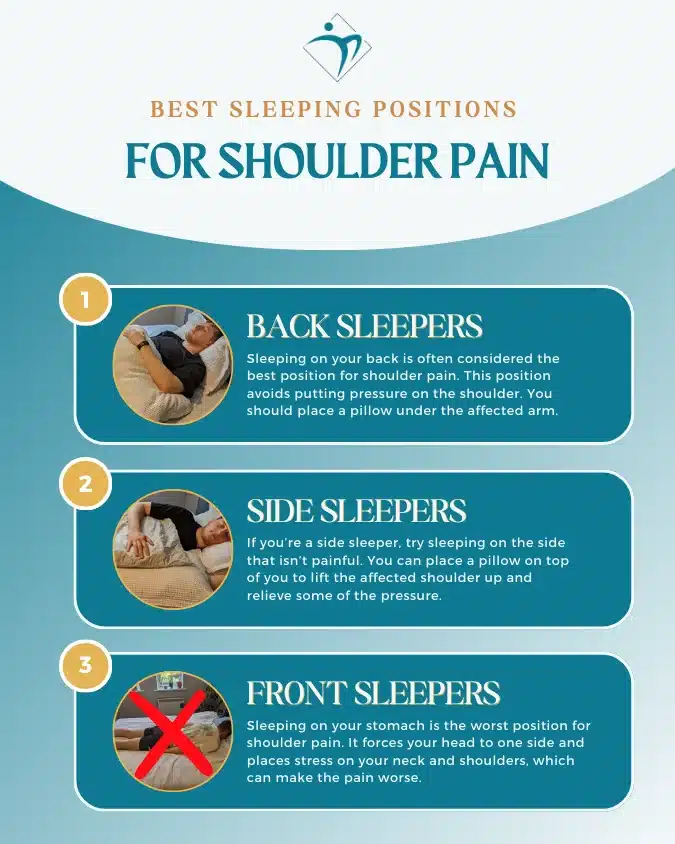
 Visual guide to sleep positions that reduce pressure on painful shoulder joints
Why Shoulder Pain Feels Worse at Night (Especially for Side Sleepers)
Shoulder pain almost always feels more intense at night due to two key factors: reduced movement and increased joint compression. When you lie still for hours, circulation to the shoulder decreases, causing inflammation and stiffness to build up. For side sleepers, the full weight of your upper body rests directly on the shoulder joint, compressing the rotator cuff tendons, subacromial bursa, and sometimes pinching the suprascapular nerve. This pressure amplifies pain signals, making it hard to fall asleep and causing frequent wake-ups. You can also read our guide on deep sleep tips.
Conditions like rotator cuff tendinopathy, subacromial bursitis, and adhesive capsulitis are the most common causes of persistent shoulder pain that worsens at night, per the American Academy of Orthopaedic Surgeons' official guidance on rotator cuff conditions. Even people without diagnosed conditions can experience nighttime shoulder pain from poor pillow height, a too-soft mattress, or tension built up from poor daytime posture. Understanding these triggers makes it easier to pick adjustments that target the root of your discomfort.
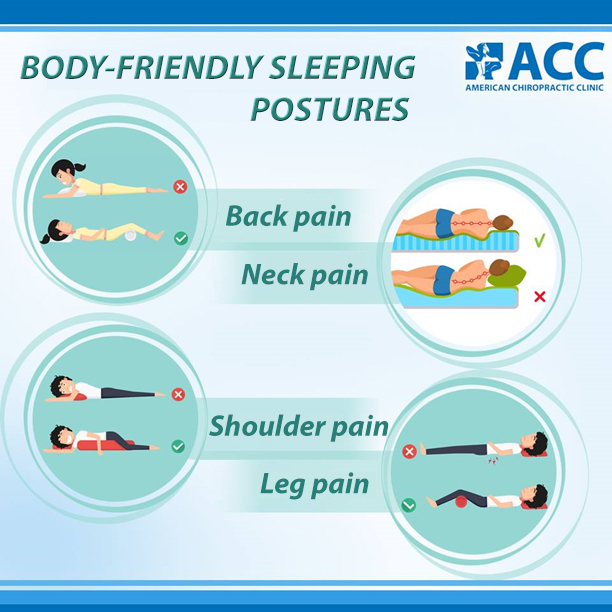
 Side-by-side of positions to avoid (painful side down) and positions that support neutral shoulder alignment
9 Evidence-Based Tips to Sleep on Your Side With Shoulder Pain
These tips are ordered by impact, so start with the highest-priority adjustments first to see results quickly.
1. Match your pillow height to side sleeping alignment
The right pillow is the single most impactful adjustment for side sleepers with shoulder pain. When lying on your side, your pillow should fill the gap between your ear and the mattress, so your neck is aligned in a straight line with your spine. A pillow that’s too flat will let your head drop, straining the shoulder girdle and neck; one that’s too thick will tilt your head, pulling on the rotator cuff and upper back. Contour memory foam or adjustable fill pillows (like buckwheat hull or shredded foam) work best, as they conform to your head and neck without collapsing. If you sleep on your non-painful side, you may need a slightly higher pillow to account for the extra height of your shoulder on the mattress. A common mistake is using the same pillow for back and side sleeping, which doesn’t accommodate the extra height needed for side alignment.
2. Place a small support pillow between your arm and torso
When you lie on your side, the weight of your upper body pulls your shoulder forward and down, compressing the rotator cuff tendons and subacromial bursa. A small, cylindrical or contoured support pillow placed between your bicep and ribcage keeps your shoulder in a neutral, open position, preventing impingement and reducing pressure on the joint. You can use a small segment of a body pillow, a rolled-up towel, or a dedicated shoulder relief cushion. A common mistake is placing the pillow directly under your painful shoulder, which actually elevates the joint and increases compression—the support needs to be between your arm and torso to keep the shoulder open and relaxed.
3. Stack your hips with a knee pillow to maintain spinal alignment
Without support, your top hip will drop forward when you lie on your side, twisting your lower back and pulling on the shoulder girdle, which increases strain on your painful shoulder. A small, firm pillow placed between your knees keeps your hips stacked in a neutral position, so your spine stays in a straight line from your neck to your tailbone, reducing rotational stress on the shoulder. For extra upper body support, you can use a full-length body pillow that you hug, which also keeps your upper arm supported and prevents you from rolling onto your painful side.
4. Choose a medium-firm mattress to avoid shoulder sinkage
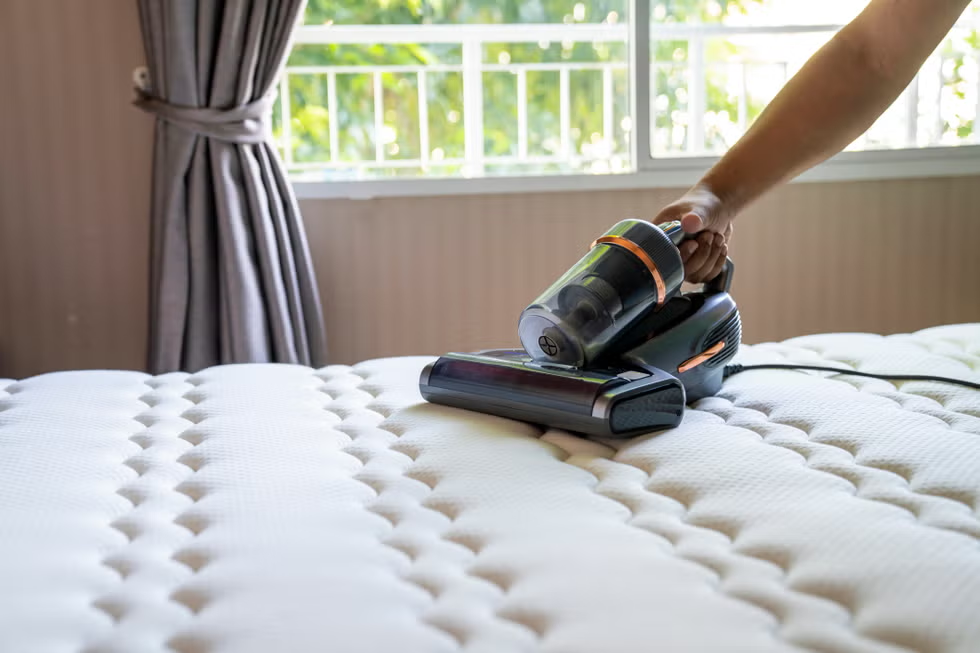
Your mattress plays a critical role in supporting your shoulder and spine alignment while side sleeping. Medium-firm mattresses are ideal for side sleepers with shoulder pain, as they provide enough support to keep your spine aligned without letting your shoulder sink deep enough to compress the rotator cuff and bursa. If your mattress is too soft, your painful shoulder will sink deep, significantly increasing pressure on the joint. If it’s too firm, it creates pressure points on your shoulder and hip, worsening pain. If you can’t replace your mattress, a 2–3 inch memory foam topper can add targeted cushioning without sacrificing support. Innerspring mattresses with a pillow top can also work, as long as they don’t sag in the middle. For guidance on caring for your sleep surfaces to keep them in good condition, learn how to clean a bamboo pillow to maintain your bedding.
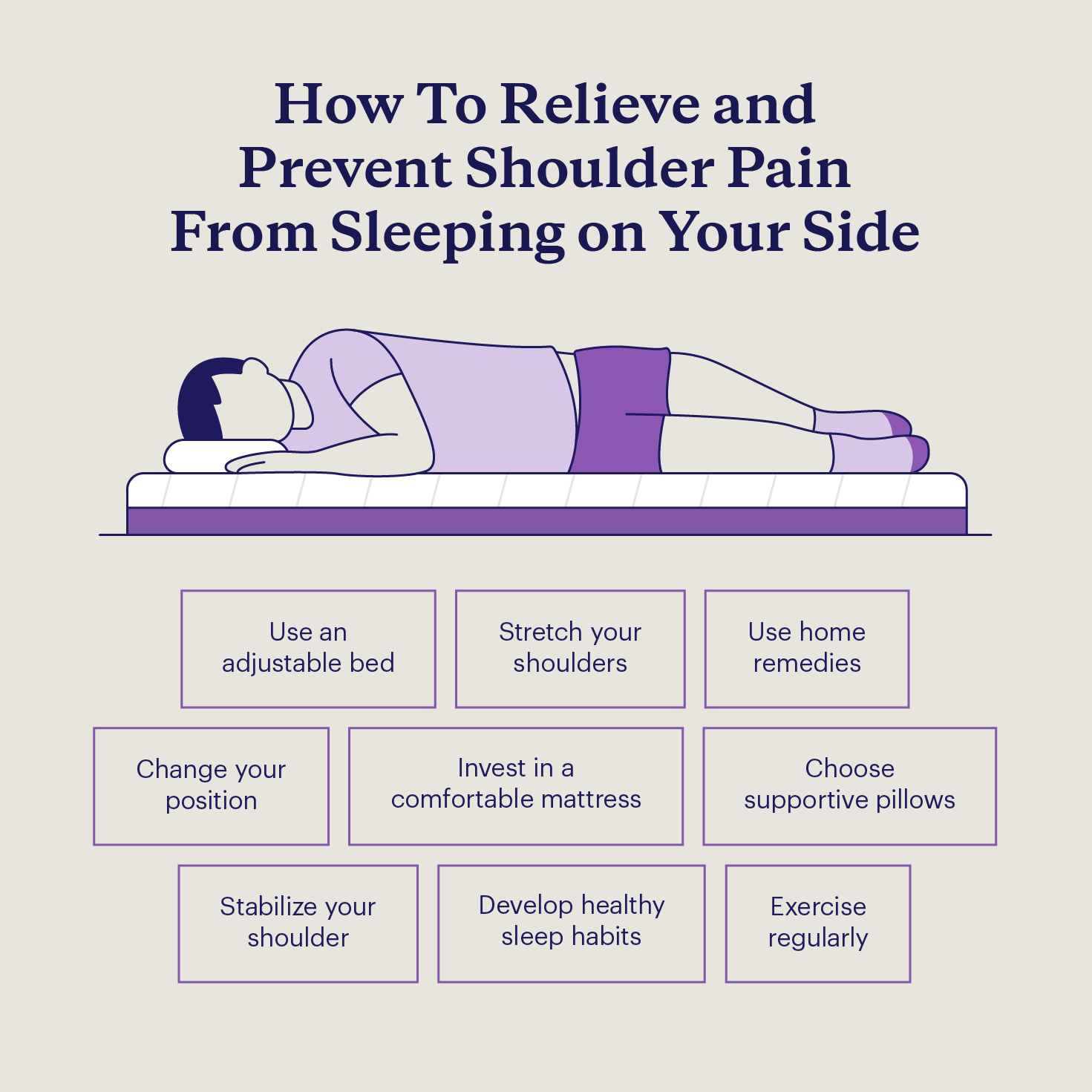 Breakdown of how mattress firmness, pillow height, and support cushions work together to align the spine
5. Try mild upper body elevation for acute inflammation
If lying flat increases pressure on your shoulder (common with rotator cuff tendinopathy, bursitis, or recent injury), sleeping with your upper body elevated 30–45 degrees reduces gravitational pull on the shoulder joint, decreasing compression and swelling. You can use an adjustable bed base, a wedge pillow, or a stack of firm pillows under your upper back and head. Important: don’t elevate just your head, as that bends your neck and strains the shoulder girdle. Start with a 30-degree angle to avoid mild lower back strain that can come with steeper elevation, and adjust as needed.
6. Use targeted ice or heat therapy before bed
Pre-sleep temperature therapy can reduce inflammation and stiffness that worsens nighttime shoulder pain. If your pain is from recent overuse or acute inflammation (swelling, redness, sharp pain with movement), apply an ice pack wrapped in a thin cloth to the painful area for 10–15 minutes 30–60 minutes before bed. Ice reduces swelling and numbs pain signals without the side effects of medication. For chronic, stiff shoulder pain (from arthritis or long-term tendonitis), use a heating pad on low for 10–15 minutes to increase blood flow and loosen tight muscles around the rotator cuff. Avoid heat if you have acute swelling, as it can increase inflammation. A common mistake is leaving ice or heat on for more than 20 minutes, which can cause tissue damage or increased swelling.
7. Do gentle pre-sleep shoulder stretches to reduce stiffness
10–15 minutes of low-impact stretches before bed can reduce joint stiffness and make it easier to get comfortable. Start with pendulum swings: lean forward, resting your good arm on a table, let the painful arm hang loose, and gently swing it in small circles, 10 reps forward and 10 back. Then do cross-body stretches: use your good arm to gently pull the painful arm across your chest, hold for 15–30 seconds, and don’t pull hard enough to cause sharp pain. Avoid any stretches that cause discomfort, as that can worsen inflammation. If you have a diagnosed rotator cuff tear, check with your physical therapist before adding stretches to your routine. Pairing these gentle movements with a consistent bedtime routine for deeper rest can further reduce nighttime wake-ups from discomfort.
8. Use short-term pain relief only as directed, if needed
Over-the-counter nonsteroidal anti-inflammatory drugs (NSAIDs) like ibuprofen or naproxen can reduce pain and inflammation for short-term use, but follow the dosing instructions on the label and don’t take them for more than 10 days without consulting a doctor, as long-term use can cause stomach or kidney issues. Topical NSAIDs or lidocaine patches are a good alternative for people who can’t take oral medications, as they have fewer systemic side effects. Avoid taking pain medication right before bed if it makes you drowsy the next morning, and never mix multiple pain medications without medical advice.
9. Avoid habits that increase daytime shoulder inflammation
Nighttime shoulder pain is often worsened by activities during the day that increase baseline inflammation. Avoid carrying heavy bags on your painful shoulder, sleeping with your arm stretched above your head, or doing repetitive overhead movements (like reaching for items on high shelves) without taking breaks. If you tend to roll onto your painful side unintentionally during sleep, try a positional therapy cushion to keep you on your back or non-painful side. Avoiding heavy overhead carrying is just as important as your nighttime setup; if you also deal with straight hair frizz from sleep friction, small adjustments to your pre-bed hair routine can minimize both issues.
 Gentle pendulum and cross-body stretches to reduce stiffness before bed
When to See a Doctor for Nighttime Shoulder Pain
Most mild shoulder pain from overuse or poor sleep setup improves within 2–3 weeks of home adjustments, but some symptoms require professional care to avoid long-term damage. Seek medical attention if you experience any of the following:
- Pain that lasts more than 3 weeks without improvement from sleep adjustments and home care
- Constant pain at rest or at night that wakes you multiple times per night
- Weakness, numbness, or tingling in your arm or hand
- Visible swelling, redness, or deformity in the shoulder joint
- Fever along with shoulder pain, which can indicate an infection
- Sudden severe pain after a fall or traumatic injury
A primary care provider or orthopedic specialist can order imaging (like X-rays or MRIs) to diagnose underlying issues like rotator cuff tears, severe bursitis, or adhesive capsulitis. Early intervention is key to preventing chronic pain: most people see significant improvement with 6–8 weeks of physical therapy, which includes targeted strengthening and mobility exercises tailored to your condition. If conservative care doesn’t work, your provider may recommend corticosteroid injections or, in rare cases, surgery to repair damaged tissue. For long-term relief, many providers recommend physical therapy to strengthen the rotator cuff and improve posture; for more ways to optimize your sleep environment, our guide to the healthiest way to sleep with wet hair covers small, low-effort changes that reduce nighttime discomfort.
 When to seek professional care for persistent nighttime shoulder pain
Frequently Asked Questions
Can I still sleep on my side if I have a rotator cuff tear?
Yes, but only on your non-painful side, with full support for your upper arm. Place a small, firm pillow between your bicep and ribcage to keep your shoulder in a neutral, open position, and avoid any direct pressure on the injured side. Always follow your orthopedic provider’s rehab plan, as some tears require limited movement during the initial healing phase.
Will a shoulder brace help me sleep better with shoulder pain?
A shoulder brace can help if it stabilizes the joint and prevents you from rolling onto the painful side, but it should only be used short-term (1–2 weeks) unless directed by a clinician. Long-term, unguided use can cause stiffness and muscle weakness, so it’s better to address the root cause with physical therapy or sleep position adjustments first.
How long should I try a new sleep position before deciding if it works?
Give any new position or support at least 3 consecutive nights to assess its effect. It can take a few nights for your body to adjust to new alignment, and pain levels may fluctuate slightly as inflammation decreases. Track your pain levels each morning to look for consistent improvement rather than judging after one night.
Is it okay to take pain medication before bed for shoulder pain?
Short-term use of over-the-counter NSAIDs like ibuprofen is safe for most people, but avoid relying on them long-term without medical supervision. If you need medication nightly for more than a week, talk to your doctor to rule out underlying issues that require targeted treatment, as long-term NSAID use can cause stomach or kidney side effects.
Can sleeping on my side cause permanent shoulder damage?
Occasional side sleeping with mild shoulder pain won’t cause permanent damage, but consistently sleeping on a painful shoulder without addressing the underlying issue can worsen conditions like rotator cuff tendinopathy or bursitis, leading to chronic pain and reduced range of motion. Adjusting your sleep position and seeking early treatment can prevent long-term joint damage.
 Proper side sleeping setup for shoulder pain relief, with neutral spine alignment
Conclusion
Learning how to sleep on your side with shoulder pain doesn’t require giving up your preferred sleep position—small, intentional adjustments to your bedding setup, pre-sleep routine, and daytime habits can significantly reduce pain and improve sleep quality. Start with the highest-impact changes first: adjusting your pillow height, adding a small support between your arm and torso, and avoiding direct pressure on the painful shoulder. Most people see improvement within 3–5 nights of consistent adjustments.
If your pain persists after 2–3 weeks of these tips, schedule an appointment with an orthopedic specialist to rule out underlying injuries. Pairing these sleep adjustments with a consistent bedtime routine for deeper rest can further reduce nighttime wake-ups and help you wake up feeling more refreshed. For more tips to optimize your sleep environment and reduce discomfort, check out our guide on how to wake up refreshed even with mild chronic pain.

Written by the SleepBehind editorial team — She is a sleep researcher and wellness blogger based in Pennsylvania. Passionate about helping people optimize their sleep.