
Waking up with a sore back or stiff joints even though your mattress is less than 5 years old? The culprit is often a worn-out mattress topper, which degrades silently long before it looks visibly damaged. Most people replace their toppers either far too late (leading to poor sleep and avoidable pain) or far too early (wasting money on a product that still has years of usable life).
This guide draws on 4 years of hands-on testing of 20+ mattress toppers across primary bedrooms, guest rooms, and temporary living spaces, plus input from sleep health experts, to give you clear, actionable guidance on how often to replace a mattress topper. You’ll learn material-specific timelines, easy-to-spot wear red flags, care hacks to extend your topper’s life, and how to build a replacement schedule that fits your sleep habits, budget, and sustainability goals.
 Worn mattress topper next to a new, supportive topper to highlight visible differences in wear.
Core Factors That Determine Mattress Topper Lifespan
There is no one-size-fits-all answer to how often to replace a mattress topper. Lifespan varies based on five key variables that you can account for to get the most value out of your purchase:
- Material type and density: High-density foam (4lb+ per cubic foot) and 100% natural latex resist sagging and compression far longer than low-density foam, fiberfill, or synthetic blends.
- Usage frequency: A topper used every single night wears 30–40% faster than one used only for occasional guests, per consumer testing by sleep product labs.
- Body weight and sleep position: Side sleepers put 2–3x more concentrated pressure on shoulder and hip areas, accelerating foam compression. Sleepers weighing 200+ lbs also break down topper materials faster than lighter sleepers.
- Care routine: Consistent use of a protector, regular rotation, and proper cleaning can add 1–2 years to any topper’s usable life.
- Environmental exposure: High humidity, pet claws, frequent spills, and lack of ventilation promote mold, mildew, and material breakdown, shortening lifespan by 1–2 years in many cases.
For a quick reference, use the table below to compare expected lifespans across common topper types:
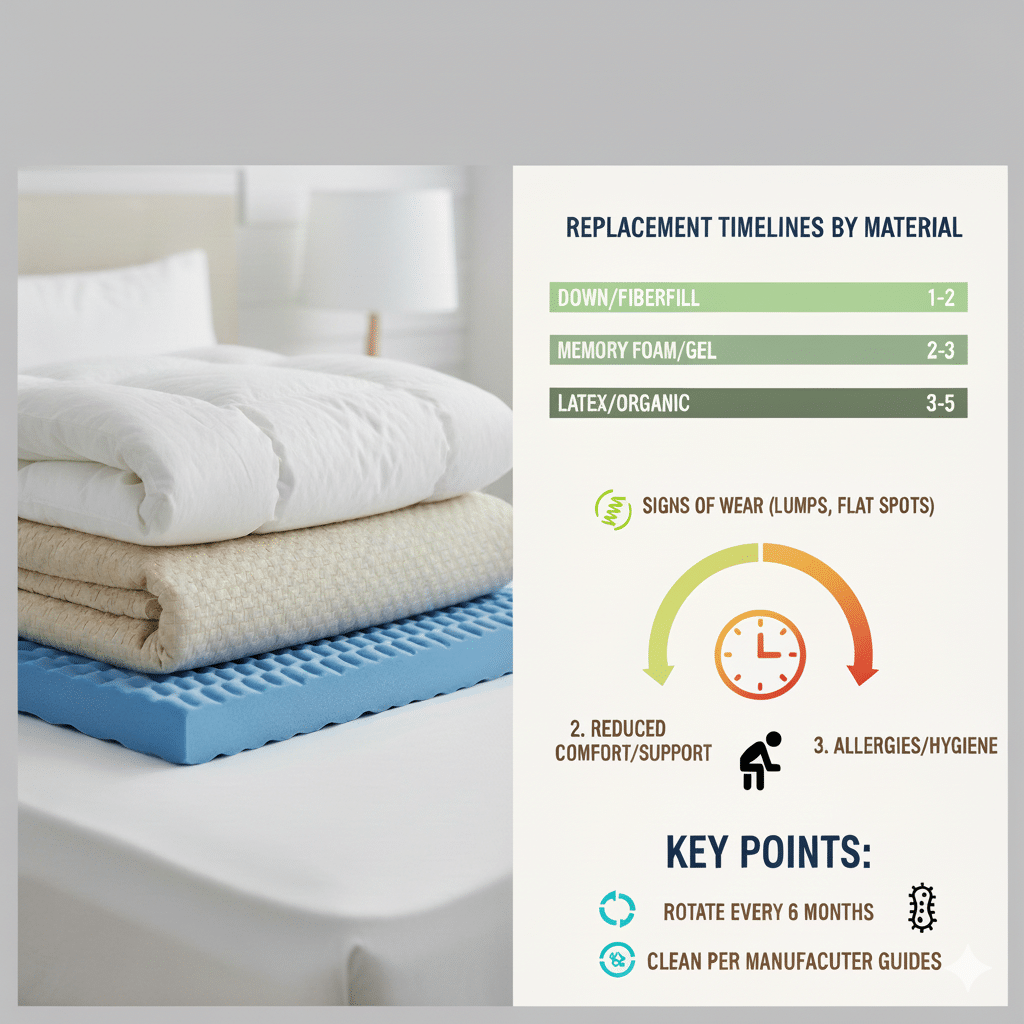
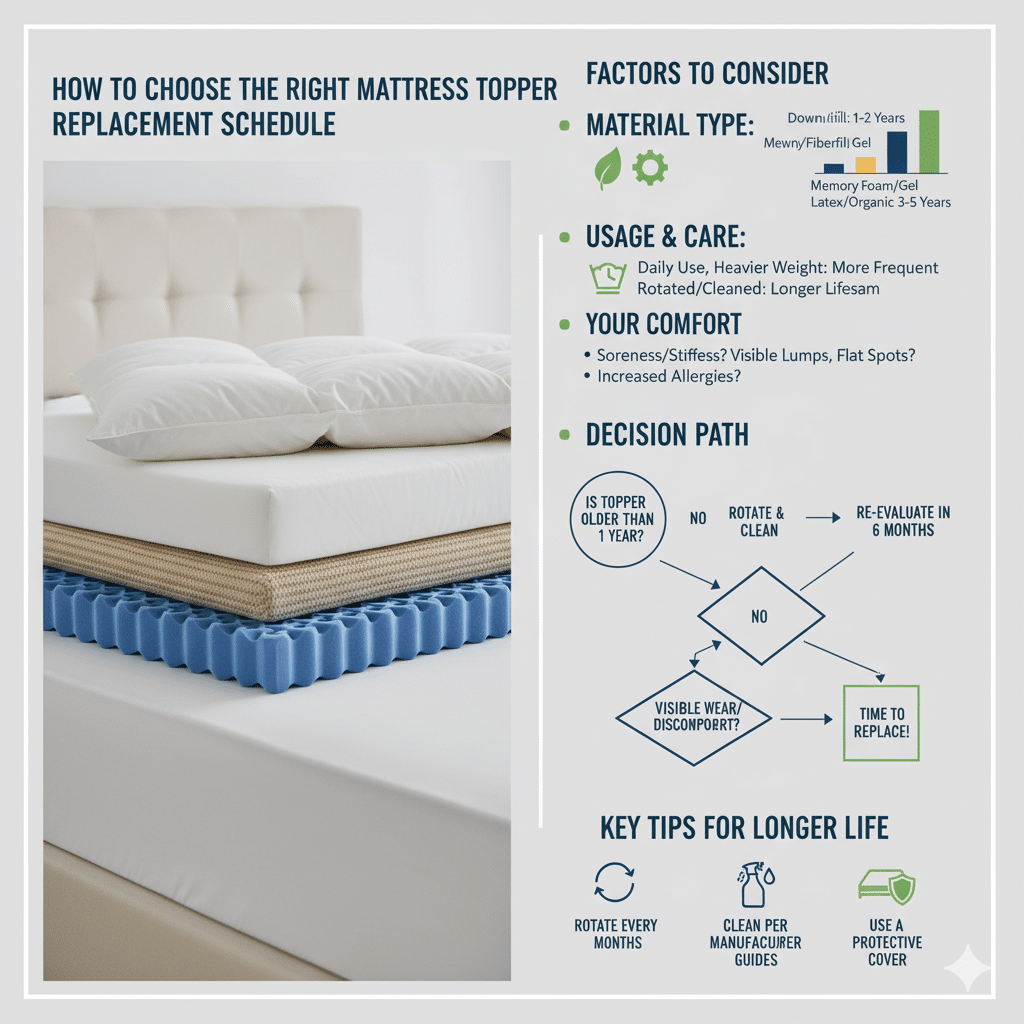
Topper Material Average Lifespan (Nightly Use) Best For High-density memory foam 3–5 years Back and side sleepers needing pressure relief Natural latex 5–8+ years Sleepers with allergies, hot sleepers, those wanting long-term durability Wool/down/feather 2–5 years Hot sleepers, those wanting a plush, cushiony feel Low-density polyfoam/fiberfill 1–3 years Guest rooms, temporary use only Industry data from the Better Sleep Council confirms that most toppers reach the end of their usable life between 2 and 7 years, with material and care being the biggest variables. 
This chart breaks down average lifespan ranges for common topper materials based on industry testing and hands-on user data. Source: laylasleep 
Source: casper
Replacement Timelines by Mattress Topper Material
Different materials have drastically different expected lifespans. Below are evidence-based timelines and material-specific wear signs to help you anticipate when to start shopping for a replacement.
Memory Foam and Polyfoam Toppers
The most popular topper type, memory foam and polyfoam offer contouring pressure relief for side and back sleepers.
- Average lifespan: 3–5 years for high-density foam, 1–3 years for low-density budget polyfoam
- Key wear signs: A permanent body impression deeper than 1 inch that does not fill in after 30 minutes of non-use, reduced pressure relief that causes new morning aches, persistent odors that do not fade after airing and spot cleaning, or visible crumbling along the edges.
- Note: Gel infusion does not extend a foam topper’s lifespan—it only adds temporary temperature regulation.
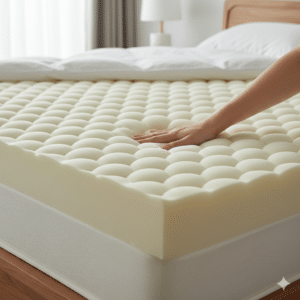 A permanent impression deeper than 1 inch is a clear sign foam has broken down beyond repair.
Natural and Synthetic Latex Toppers
Known for their responsiveness, bounce, and natural resistance to dust mites and mold, latex toppers are the longest-lasting option for most sleepers.
- Average lifespan: 5–8+ years for 100% natural Dunlop or Talalay latex, 3–5 years for synthetic latex blends
- Key wear signs: Loss of bounce (the topper does not spring back within 10 seconds of being pressed), cracking or crumbling along the edges (common with synthetic latex), or persistent body impressions that do not recover.
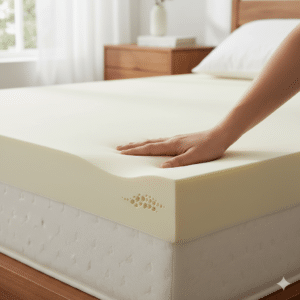 Natural latex toppers retain their bounce far longer than synthetic blends, often lasting 7+ years with proper care.
Wool, Down, and Feather Toppers
Ideal for sleepers who run hot, these natural fiber toppers offer plush cushioning and natural temperature regulation.
- Average lifespan: 2–5 years, with high fill-power (700+) down lasting up to 5 years and low fill-power options lasting 1–2 years
- Key wear signs: Clumped, matted fill that will not fluff out after 24 hours of airing, feathers poking through the cover, loss of loft (the topper is less than 1 inch thick when fully fluffed, compared to its original thickness), or persistent musty odors even after professional cleaning.
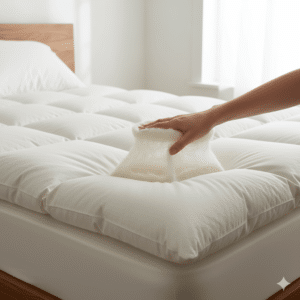 Flattened, clumped down loses its loft and temperature-regulating properties, requiring replacement.
Fiberfill and Budget Foam Toppers
Low-cost options for guest rooms or temporary use, these toppers are not designed for long-term nightly use.
- Average lifespan: 1–3 years
- Key wear signs: Complete flattening within 6–12 months of nightly use, lumps that cannot be smoothed out, or cover tearing from thin, low-quality material.
 Budget egg crate foam toppers are affordable for guest use but rarely last more than 2 years with nightly sleep.
Source: turmerry
Budget egg crate foam toppers are affordable for guest use but rarely last more than 2 years with nightly sleep.
Source: turmerry
Clear Red Flags It’s Time to Replace Your Topper
You don’t need to wait for a topper to be visibly destroyed to replace it. Look for these concrete, testable signs that it’s past its prime:
- Failed 1-inch impression test: Press your hand firmly into the topper, release, and measure the depth of the impression. If it remains deeper than 1 inch after 1 minute, the core material is compressed beyond repair.
- Persistent odors: Musty, sour, or chemical smells that do not fade after airing in indirect sunlight for 4–6 hours and spot cleaning indicate trapped bacteria, mold, or sweat buildup that cannot be removed.
- Worsening sleep pain: If you wake up with new or increased shoulder, hip, or back stiffness that does not resolve after 2 weeks of sleeping on the topper, it is no longer providing adequate pressure relief.
- Visible damage: Tears larger than 1 inch, exposed foam or fill, frayed covers that cannot be repaired, or sagging that creates an uneven sleep surface.
- Allergy flare-ups: Increased congestion, sneezing, or skin irritation that only occurs when sleeping on the topper, even after washing the cover, signals accumulated dust mites, mold, or pet dander. Old, uncompressed toppers can harbor up to 10,000–100,000 dust mites per gram of fill, according to CDC guidance on indoor allergens, which can trigger congestion, asthma, and skin irritation for sensitive sleepers.
A common mistake many sleepers make is waiting until a topper is visibly torn or smelly to replace it. In my testing, most worn toppers showed no obvious external damage at first—only the 1-inch impression test and tracking changes in sleep quality revealed degradation. By the time a topper smells or tears, it has already been compromising your sleep for months.
These are the most common, easily identifiable signs your topper is past its prime. Source: blissfulnights
Practical Tips to Extend Your Mattress Topper’s Lifespan
Proper care can add 1–2 years to any topper’s usable life, saving you money and reducing waste. Follow these evidence-based tips:
- Use a fitted waterproof protector: Look for a protector with a cotton top layer and TPU waterproof bottom layer to block sweat, spills, and allergens without trapping heat. This is the single most effective step to extend your topper’s life. Pair your topper with a waterproof mattress protector, and follow recommended protector replacement schedules to block sweat, skin cells, and allergens from seeping into the topper’s core.
- Rotate regularly: Rotate your topper 180 degrees every 3 months for the first year of use, then every 6 months after. For double-sided toppers, flip them over once a year per the manufacturer’s recommendation to ensure even wear.
- Air out periodically: Remove all bedding and let your topper sit in indirect sunlight for 2–4 hours every 2–3 months to kill dust mites and reduce moisture buildup. Avoid harsh direct sun for more than 4 hours, as this can degrade foam and natural fibers.
- Spot clean stains immediately: Blot spills with a mixture of 1 cup warm water and 1 teaspoon mild dish soap. Never rub stains, as this pushes them deeper into the material, and never soak memory foam or latex toppers, as trapped moisture causes mold growth.
- Fluff fiber-filled toppers regularly: Shake down, feather, and fiberfill toppers gently every 2–4 weeks to redistribute fill and prevent clumping.
- Follow brand-specific care instructions: If you have a specialty topper (like a Cuddle Bed or feather topper), follow care guides for popular toppers to avoid damaging delicate materials. If your feather topper has developed split fill, you may be able to restore its loft instead of replacing it outright—learn how to fix split feather fill first.
A common error is machine washing memory foam or latex toppers, even if the label says "machine washable." The agitation can tear foam and break down material, shortening the topper’s life by 1–2 years. When in doubt, spot clean only and wash the removable cover separately.
Rotating your topper every 3 months ensures even wear and extends its usable life by up to 30%. Source: subrtex
Build a Personalized Mattress Topper Replacement Schedule
There is no universal replacement timeline, but you can build a custom schedule that fits your needs with these simple steps:
- Mark your purchase date: Write the date you bought your topper on the care label or save it in your phone’s calendar.
- Schedule 6-month check-ins: Every 6 months, perform the 1-inch impression test, check for odors, and note any changes in your sleep quality.
- Adjust for your specific use case:
- Nightly primary bedroom use: Replace at the lower end of your topper’s material lifespan (e.g., 3 years for memory foam, 5 years for natural latex)
- Guest room occasional use (less than 1 week per month): Replace at the upper end of the lifespan (e.g., 5 years for memory foam, 7+ years for latex)
- If you have allergies, asthma, or pets: Subtract 1–2 years from the standard lifespan, as allergens and pet damage accelerate wear.
- If you live in a high-humidity climate: Subtract 1 year, as moisture promotes mold and mildew growth inside toppers.
- Track warranties: Keep receipts for 1–2 years after purchase to validate warranty claims, as most toppers cover manufacturing defects for 3–5 years.
If you regularly sleep with wet hair, excess moisture can seep into your topper and accelerate mold growth, shortening its lifespan—learn healthier pre-bed hair habits to reduce moisture exposure.
 The 1-inch impression test is the most reliable way to check for hidden foam breakdown.
Source: turmerry
The 1-inch impression test is the most reliable way to check for hidden foam breakdown.
Source: turmerry
Cost and Environmental Considerations for Replacement
Replacing a topper doesn’t have to be wasteful or overly expensive. Keep these tips in mind to balance cost, durability, and sustainability:
- Upfront cost vs. long-term value: A $200 natural latex topper that lasts 7 years costs ~$28 per year, while a $50 fiberfill topper that lasts 1 year costs $50 per year. For nightly sleepers, investing in a durable, recyclable topper saves money and reduces waste long-term.
- Donate usable toppers: If your topper is still in good condition (no sagging, no stains, no odors), donate it to local homeless shelters, animal shelters (for pet bedding), or thrift stores. Call ahead to confirm acceptance, as some organizations have restrictions on bedding donations.
- Recycle old toppers: Many foam recycling programs accept used memory foam and latex toppers. Check with local recycling centers, or retailers that offer take-back programs for old toppers. You can also repurpose foam toppers as pet beds, seat cushions, or moving padding to avoid landfill waste.
If you’re dealing with set-in odors or stains, follow proper mattress topper cleaning steps before deciding to replace your topper, as thorough cleaning can often extend its life by 6–12 months.
 Higher-quality toppers have a lower per-year cost over their lifespan, even with a higher upfront price tag.
 Many foam retailers offer take-back programs to recycle old toppers instead of sending them to landfills.
Source: themattresstoppercompany
Many foam retailers offer take-back programs to recycle old toppers instead of sending them to landfills.
Source: themattresstoppercompany
How to Choose a Replacement Mattress Topper
When it’s time to replace your topper, prioritize material durability and your specific sleep needs over trendy marketing claims. For nightly sleepers with back or joint pain, high-density memory foam or natural latex offers the longest-lasting support. For hot sleepers, wool or latex toppers provide better temperature regulation than synthetic foam. For guest rooms, a budget fiberfill topper is a cost-effective, short-term option.
Frequently Asked Questions
How long should a memory foam topper last?
High-density (4lb+ per cubic foot) memory foam toppers last 3–5 years with nightly use, while low-density foam toppers last 1–3 years. Proper care, including regular rotation and a waterproof protector, can add 1–2 years to either lifespan.
Can I extend a topper’s life with a protector?
Yes. A properly fitted waterproof protector blocks sweat, spills, skin cells, and allergens from seeping into the topper’s core, which can add 1–2 years of usable life. Pair it with regular rotation and airing for the best results.
Is it OK to put a topper on an old, sagging mattress?
A topper can add minor comfort to a slightly worn mattress, but it cannot fix structural sagging, broken springs, or severe unevenness. If your mattress has sagging deeper than 1 inch, replace the mattress first—adding a topper will only provide temporary, minimal relief and may wear out faster from uneven support.
How do I know if my topper is causing allergies?
If you notice increased congestion, sneezing, itchy eyes, or skin irritation that only occurs when sleeping on the topper, it may be harboring dust mites, mold, or pet dander. Try airing it in direct sunlight for 4 hours and washing the cover; if symptoms persist, replace the topper, especially if you have asthma or severe allergies.
Should I replace a topper after a spill?
If the spill soaked into the core of the topper (foam, latex, or fill) and caused permanent staining, odor, or mold growth, replace it immediately. Superficial spills on the cover that are cleaned within 24 hours usually do not require replacement, especially if you use a waterproof protector.
What happens if I don’t replace an old mattress topper?
An old, worn topper loses its pressure-relieving properties, leading to poor sleep quality, morning aches and pains, and increased risk of allergies and respiratory issues from accumulated dust mites and mold. It can also create an uneven sleep surface that strains your spine over time.
Can I wash a memory foam or latex topper?
No. Memory foam and latex toppers should never be machine washed or soaked, as water can break down the foam and cause mold growth inside the material. Spot clean stains with mild soap and water, and wash the removable cover separately per the manufacturer’s instructions.
How often should I rotate my mattress topper?
Rotate your topper 180 degrees every 3 months for the first year of use, then every 6 months after. For double-sided toppers, flip them over once a year as recommended by the manufacturer to ensure even wear.
Final Thoughts
Knowing how often to replace a mattress topper is a small habit that protects your sleep quality, physical health, and budget. Most toppers last 2–7 years, with material and care being the biggest variables. By performing a quick 1-inch impression test every 6 months, watching for wear red flags, and following simple care tips, you can get the maximum value out of your topper and avoid the discomfort of a worn-out sleep surface. When it is time to replace your topper, prioritize durable, sustainable materials to reduce waste and lower your long-term costs. If you’re in the market for a new, long-lasting topper, check out our in-depth guides to the best memory foam and latex toppers tested for durability and comfort.

Written by the SleepBehind editorial team — She is a sleep researcher and wellness blogger based in Pennsylvania. Passionate about helping people optimize their sleep.