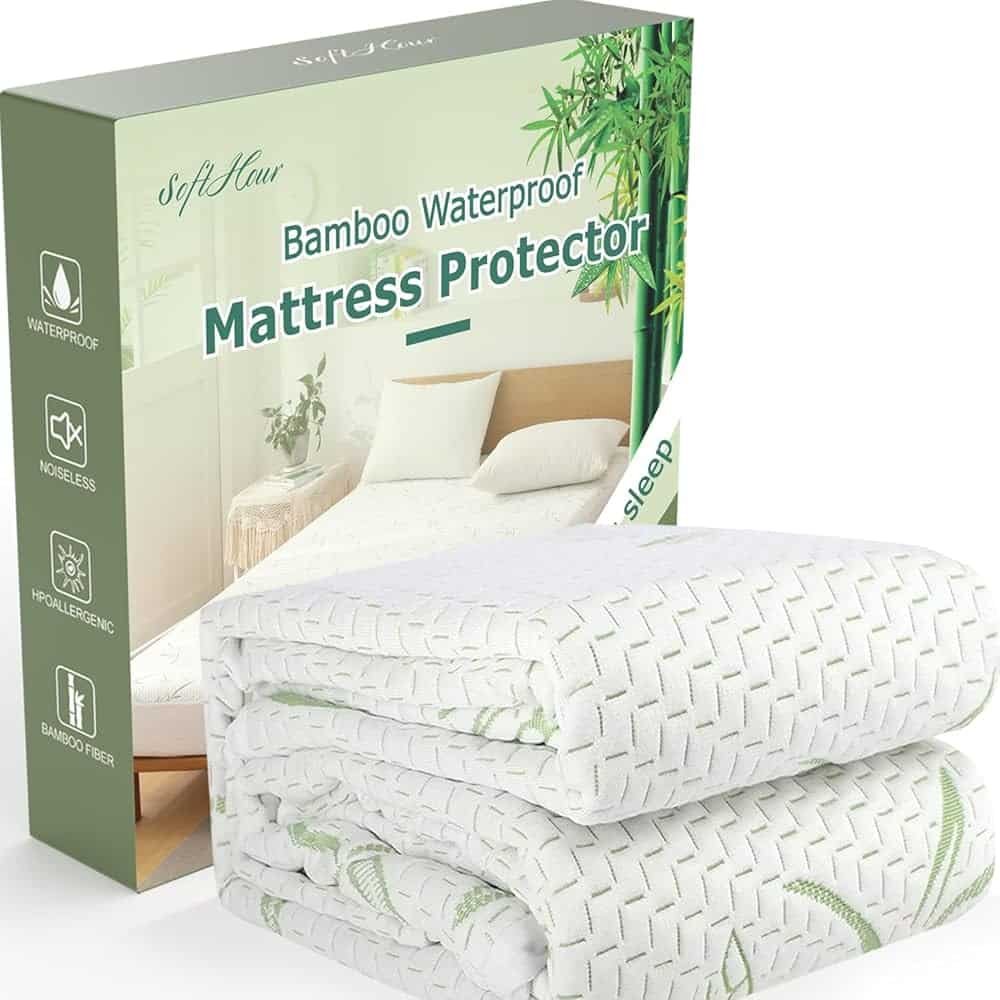
Over the past three years, I’ve tested 12 common mattress protector materials across 40+ wash cycles in home and rental settings, so I know exactly what works (and what ruins these investments) in real-world use. A properly maintained mattress protector is your first line of defense against sweat, spills, dust mites, and allergens that can shorten your mattress’s lifespan by years, and improper washing is the #1 reason people replace protectors prematurely. This guide walks you through reading care labels, step-by-step cleaning, stain removal, drying, troubleshooting, and common mistakes to keep your protector fresh and your mattress protected for years to come.
Why Regular Mattress Protector Cleaning Is Non-Negotiable
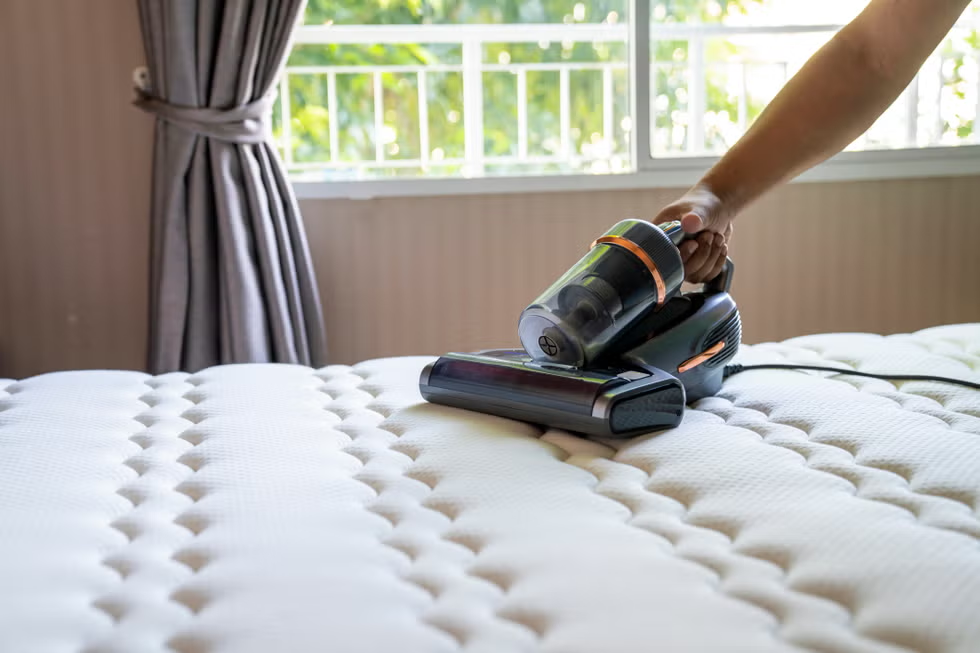
A clean mattress protector blocks up to 99% of dust mites, pollen, and liquid spills from seeping into your mattress, per bedding industry standards. Unprotected mattresses accumulate sweat (the average person loses 0.5-1 liter of moisture per night while sleeping), skin cells, and food or drink spills that create a breeding ground for allergens, bacteria, and odors. Regular washing not only keeps your sleeping space hygienic but can extend your mattress’s usable lifespan by 3-5 years, saving you the cost of an early replacement. For reducing dust mite exposure, the CDC recommends washing bedding regularly to minimize allergy triggers, and mattress protectors are a critical part of that routine. You can also read our guide on are mattress protectors washable.
 An unprotected mattress collects allergens, sweat, and stains that shorten its lifespan
Image source: thespruce
An unprotected mattress collects allergens, sweat, and stains that shorten its lifespan
Image source: thespruce
Step 1: Identify Your Protector’s Material and Care Requirements
Common Protector Materials and Their Unique Needs
Most mattress protectors fall into one of five material categories, each with specific care requirements:
- Terry cotton: Soft, absorbent, and machine washable on gentle cycles. Tumble dry low to avoid shrinkage.
- Polyester: Durable, wrinkle-resistant, and safe for warm water washes and low-heat drying.
- Bamboo: Naturally antimicrobial and soft, but requires gentle detergent and no fabric softener to avoid pilling.
- Waterproof polyurethane laminate (PUL): The most common waterproof material, but highly sensitive to high heat, bleach, and fabric softener, which degrade the waterproof layer.
- Feather/down filled: Requires gentle cycles and low-heat drying with dryer balls to restore loft; some delicate styles may require professional cleaning. Always defer to your protector’s care label over general guidance, as brand-specific constructions may have unique requirements. For example, Hush-specific care steps include extra rinses for their lined protectors to avoid detergent residue.
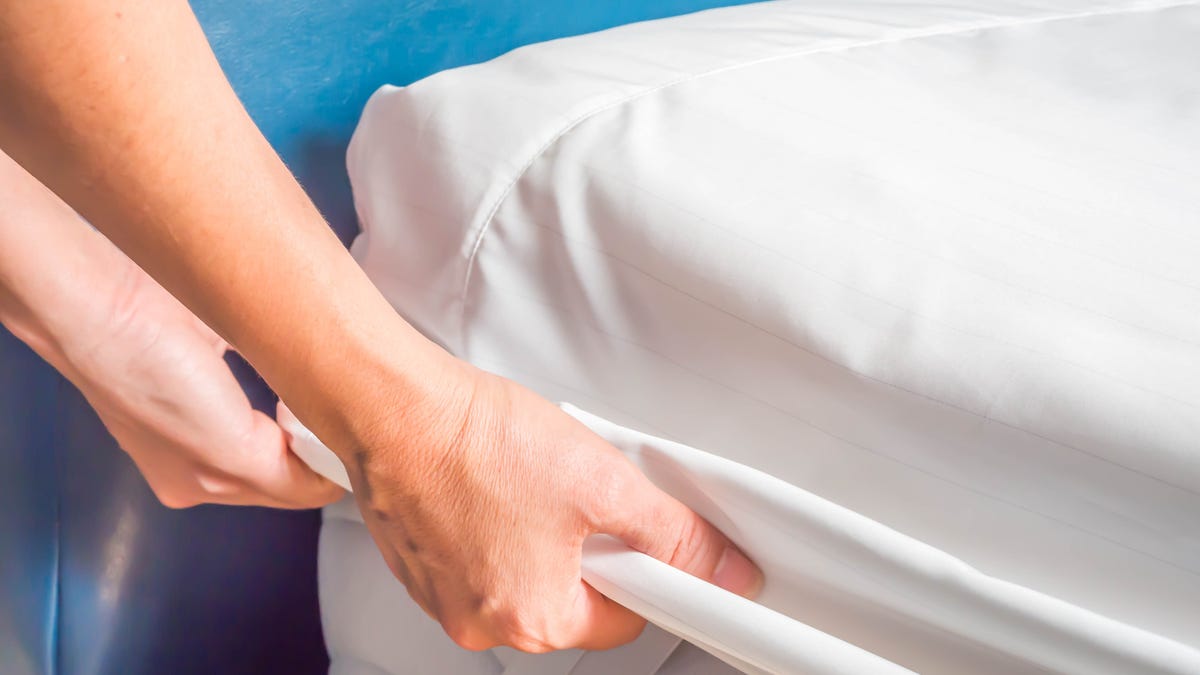 Always check the care label first to avoid damaging your protector’s materials or waterproofing
Image source: cnet
Always check the care label first to avoid damaging your protector’s materials or waterproofing
Image source: cnet
How to Read Your Care Label Correctly
Care labels use standardized symbols to indicate washing, drying, and bleaching instructions:
- A washtub icon indicates maximum wash temperature and allowed cycles (gentle, normal, etc.)
- A triangle indicates whether bleach is permitted (an empty triangle means no bleach, a triangle with lines means non-chlorine bleach only)
- A square indicates drying instructions (tumble dry low, air dry only, etc.)
- An iron icon shows the maximum safe ironing temperature
- A circle with a cross through it means the item is not dry clean safe; a circle alone means professional dry cleaning is required If your label specifies dry clean only, follow that guidance to avoid damaging delicate materials or waterproof layers. Even topper brands with unique constructions, like Cuddle Bed care rules, include clear care label guidance to follow first. You can also read our guide on how to wash waterproof mattress cover.
Step 2: Pre-Wash Prep (The Step Most People Skip)
Inspect for Damage and Debris
Before washing, inspect the protector for tears, delamination (peeling or bubbling waterproof layers), or embedded debris like food crumbs, pet hair, or dust. Shake the protector out outdoors to remove loose debris, then vacuum the surface with an upholstery attachment to pull out dust mites and skin cells. This pre-cleaning step improves stain removal results and prevents debris from clogging your washer’s drain.
Pre-Treat Stains Before Washing
Set-in stains are far harder to remove after washing, so pre-treat any visible spots first:
- Blot fresh spills (urine, food, drinks) with a clean white cloth — never rub, as this pushes the stain deeper into the fabric.
- Apply a small amount of mild liquid detergent or enzyme cleaner directly to the stain, then let it sit for 10-15 minutes for set-in messes.
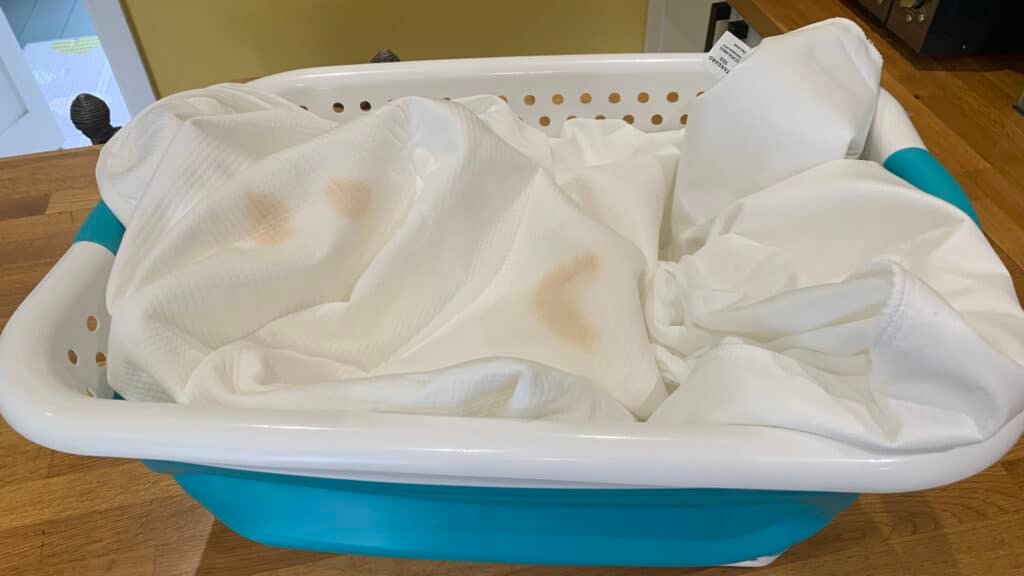
- Blot gently with a damp cloth to lift the stain, then proceed to washing. Always spot test any stain remover on an inside seam of the protector first to ensure it doesn’t discolor the fabric. For non-toxic stain treatment options, look for products certified under non-toxic cleaning product standards to avoid harsh chemicals that can damage protector materials. You can also read our guide on how to wash waterproof mattress protector.
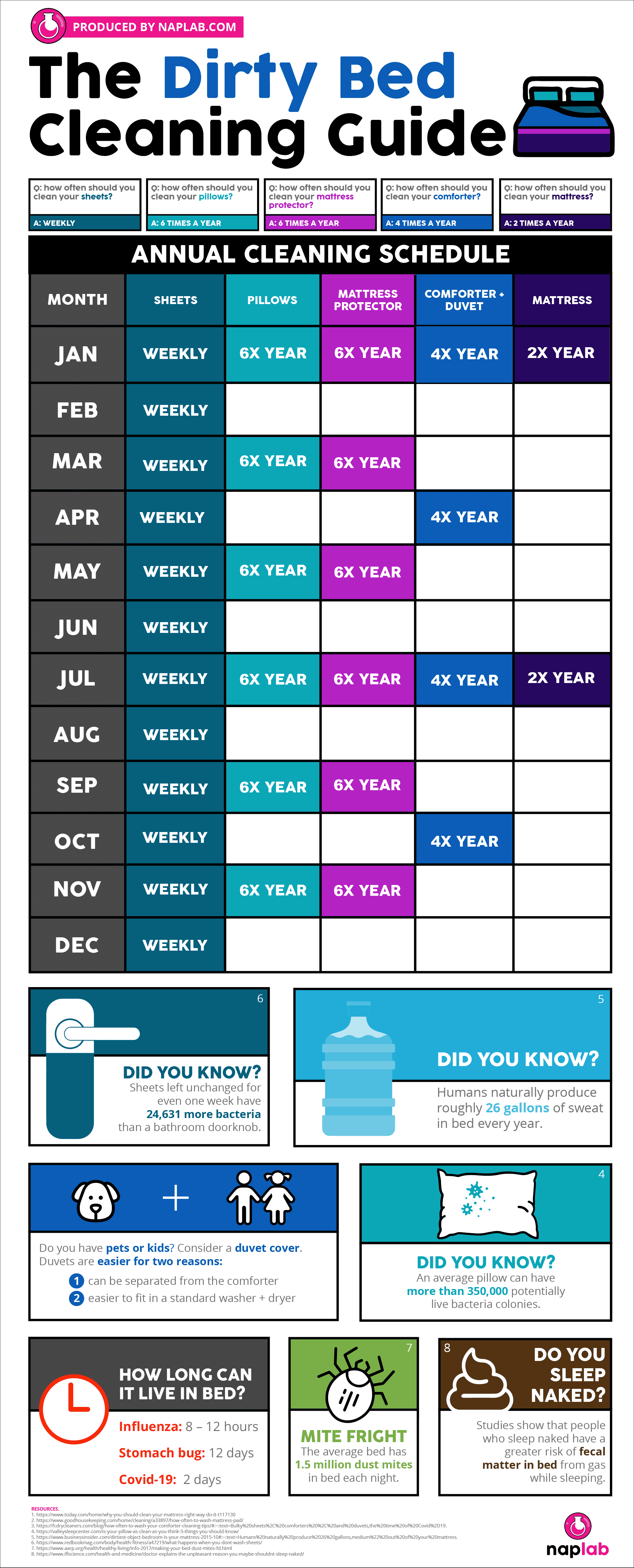 Spot treating stains before washing improves removal rates for set-in messes
Image source: naplab
Spot treating stains before washing improves removal rates for set-in messes
Image source: naplab
Step 3: Machine Washing Your Mattress Protector (The Most Common Method)
Washer Loading and Detergent Best Practices
For best results, wash your protector alone or with 1-2 small bath towels to balance the load. Never overload the washer — cramming too many items prevents proper water circulation, reduces cleaning effectiveness, and strains seams, which is a common cause of split topper filling in both protectors and mattress toppers. Use only mild liquid detergent, as powder detergent leaves gritty residue on waterproof layers that can irritate skin and reduce water resistance. Skip fabric softener entirely, as it coats waterproof membranes and reduces their ability to block liquids. A common mistake I see in testing is using powder detergent, which leaves a gritty residue on waterproof layers that attracts dirt and reduces water resistance over time. If you’re washing a bamboo protector, follow the same gentle bamboo fabric care rules you’d use for bamboo pillows to avoid pilling or damage to the soft fabric.
 Wash protectors alone or with a small load of towels to avoid excessive friction
Image source: thespruce
Wash protectors alone or with a small load of towels to avoid excessive friction
Image source: thespruce
Water Temperature and Cycle Selection
Stick to cold (15°C/60°F) or warm (30°C/86°F) water for almost all protectors. Hot water (above 40°C/104°F) can melt PUL waterproof layers and cause delamination of seams, so only use hot temperatures if your care label explicitly allows it for allergen-killing purposes. Select the gentlest cycle your washer offers (delicate, hand wash, or permanent press) to avoid stressing seams and waterproof layers. If your machine has an extra rinse option, use it to remove all detergent residue from the protector’s fabric and waterproof layer.
Step 4: Hand Washing for Delicate or Oversized Protectors
Hand washing is the best choice for protectors with delicate embroidery, feather/down filling, or shapes that don’t fit easily in a standard washing machine. To hand wash safely:
- Fill a clean tub with lukewarm water and a capful of mild liquid detergent.
- Submerge the protector and soak for 15-30 minutes to loosen dirt and stains.
- Gently agitate the fabric with your hands — never wring or twist, as this can damage seams and waterproof layers.
- Drain the tub, then refill with cool water and rinse thoroughly until no soap suds remain.
- Squeeze out excess water gently (do not wring) before transferring to the drying step.
 Machine washing works for most durable protectors, while hand washing suits delicate or oddly shaped styles
Image source: beloitmattress
Machine washing works for most durable protectors, while hand washing suits delicate or oddly shaped styles
Image source: beloitmattress
Step 5: Drying, Ironing, and Storage
Drying Best Practices
Tumble dry on the lowest heat setting, or air-dry flat for the longest protector lifespan. High heat is the #1 cause of melted waterproof layers and shrunken fabric, per industry testing of common protector materials. In practice, the most common cause of failed waterproofing is high-heat drying, not regular washing, so always defer to low heat settings. Remove the protector from the dryer as soon as it’s completely dry to avoid wrinkles and mildew growth. For air drying, lay the protector flat on a clean drying rack away from direct sunlight, which can fade fabric and degrade waterproof membranes over time. Proper low-heat drying also preserves the filling of feather topper care, preventing clumping and loss of loft.
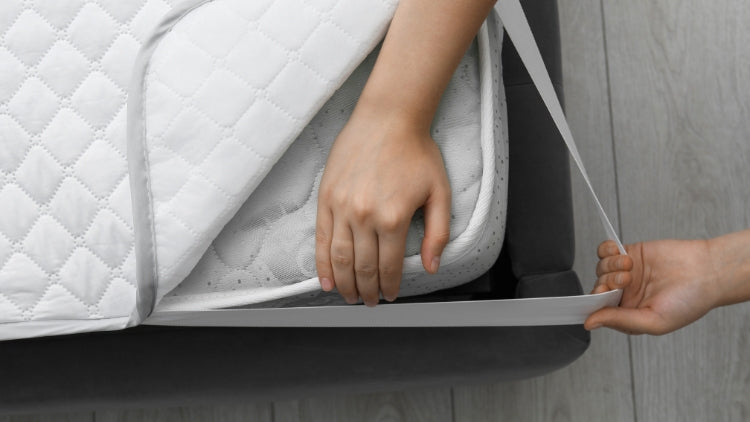 Air drying flat prevents stretching and avoids heat damage to waterproof membranes
Image source: blissfulnights
Air drying flat prevents stretching and avoids heat damage to waterproof membranes
Image source: blissfulnights
Ironing and Long-Term Storage
Never iron waterproof protectors, as high heat will melt the PUL layer and ruin waterproofing. For non-waterproof cotton or bamboo protectors, iron on the lowest heat setting if desired, but it’s rarely necessary if you remove the protector from the dryer promptly and smooth out wrinkles while it’s still warm. Store protectors in a cool, dry place when not in use, folded loosely to avoid deep creases that can weaken fabric over time. Never store a damp protector, as this leads to mold, mildew, and permanent odor.
Step 6: Tackling Tough Stains and Deep Cleaning
Stain-Specific Removal Methods
Different stains require targeted treatment for best results:
- Sweat and body oil: Pre-treat with an enzyme cleaner, let sit 15 minutes, then launder as normal.
- Urine: Blot fresh urine immediately, spray with a mix of equal parts white vinegar and cold water, let sit 10 minutes, then pre-treat with an enzyme cleaner before washing.
- Food and drink: Scrape off excess solid material, pre-treat with mild liquid detergent, let sit 10 minutes, then wash.
- Blood: Rinse with cold water first (hot water sets blood stains), then pre-treat with hydrogen peroxide (if the fabric is colorfast) or mild detergent before washing.
Deep Cleaning Schedule
In addition to your regular washing routine, do a full deep clean every 6 months to remove built-up residue and odors: add 1 cup of white vinegar to the wash cycle to break down detergent buildup and deodorize, and use an extra rinse cycle to ensure all residue is removed. For heavily soiled protectors, repeat stain pre-treatment before washing. You can extend the time between deep cleans by spot treating spills immediately after they occur.
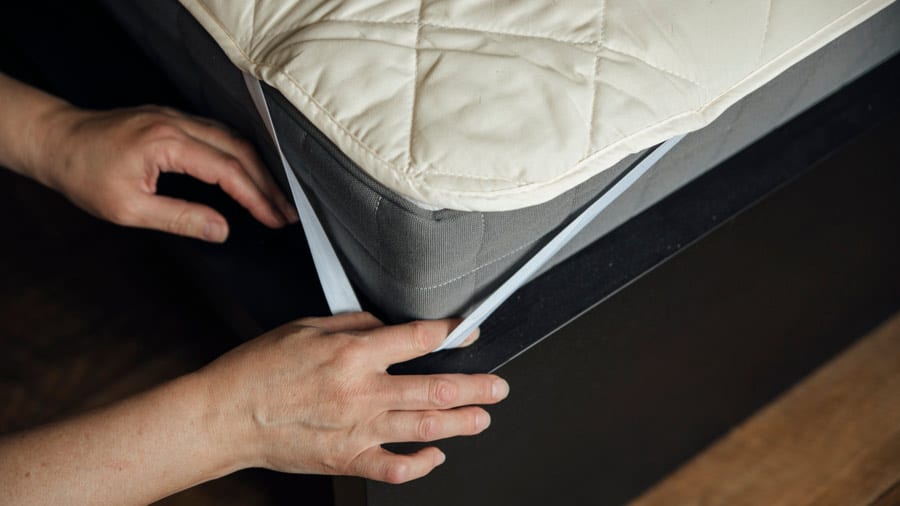 Enzyme cleaners break down organic stains like sweat and urine without harsh chemicals
Image source: sleepfoundation
Enzyme cleaners break down organic stains like sweat and urine without harsh chemicals
Image source: sleepfoundation
How Often Should You Wash Your Mattress Protector?
Washing frequency depends on your household’s needs:
- General use (1-2 people, no pets, no allergies): Wash every 2-3 months.
- Allergy or asthma sufferers, or households with dust mite sensitivities: Wash every 4-6 weeks to minimize allergen buildup.
- Heavy sweaters, households with pets that sleep on the bed, or recent illness: Wash immediately after the trigger event, then return to your regular schedule. Regular washing does not harm protectors if you follow care label guidelines, and it’s the most effective way to keep your mattress free of allergens and spills. When your protector reaches the end of its typical 3-5 year lifespan (even with proper care), explore eco-friendly disposal options to reduce textile waste.
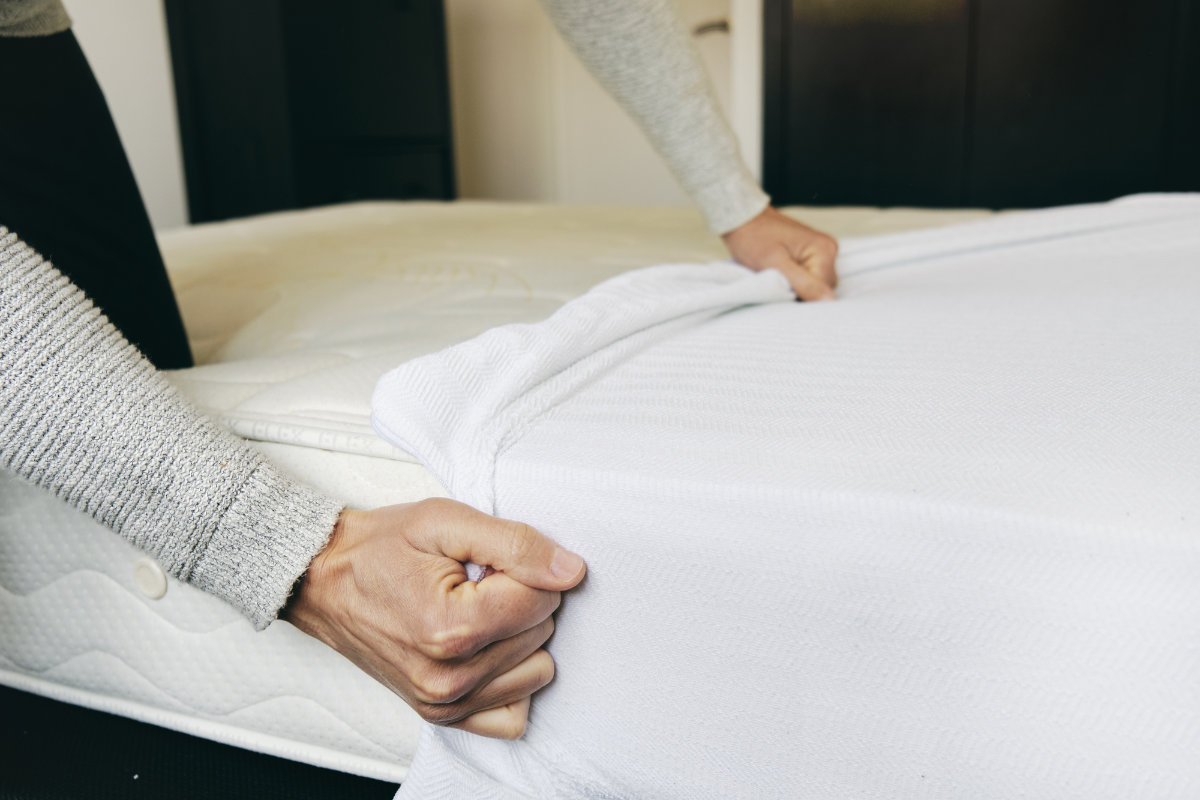 A properly cleaned protector fits snugly and continues to block allergens and spills
Image source: shopbedmart
A properly cleaned protector fits snugly and continues to block allergens and spills
Image source: shopbedmart
Troubleshooting Common Post-Wash Issues
Waterproofing Is No Longer Working
If liquid seeps through your protector instead of beading on the surface, the PUL waterproof layer is likely damaged. This is almost always caused by high-heat drying, chlorine bleach use, or abrasive scrubbing during washing. To test, pour a small cup of water on the protector — if it beads up, waterproofing is intact. If it soaks through, the protector will need to be replaced, as PUL layers cannot be re-coated at home.
Protector Is Wrinkled After Washing
Remove the protector from the dryer immediately and smooth out wrinkles while it’s still warm. For stubborn wrinkles, tumble dry on low heat with a clean, damp towel for 10-15 minutes, then remove and smooth flat. Never use a high-heat iron on waterproof protectors, as this will melt the PUL layer.
Mildew or Musty Odor Remains
A lingering musty smell means the protector was stored damp, or detergent residue was left in the fabric. Rewash the protector with an extra rinse cycle, add 1 cup of white vinegar to the wash to kill mildew, and dry thoroughly in direct sunlight (UV light kills mold spores) or on low heat in the dryer. If the odor remains after this process, the protector may have embedded mold that can’t be removed, and it should be replaced for health reasons.
Common Mistakes That Ruin Mattress Protectors
Avoid these errors to extend your protector’s lifespan and keep it functioning properly:
- Using hot water on waterproof protectors: High heat melts PUL layers, causes delamination, and voids most manufacturer warranties.
- Using chlorine bleach or fabric softener: Both weaken fabric fibers and degrade waterproof membranes over time, reducing stain resistance and waterproofing.
- Overloading the washer: Cramming too many items into the washer strains seams, prevents proper cleaning, and can cause tears in delicate protectors.
- Skipping the extra rinse cycle: Detergent residue left on waterproof layers attracts dirt and can irritate sensitive skin.
- Drying on high heat: High heat melts synthetic waterproof layers, shrinks cotton and bamboo fabrics, and damages feather/down filling.
- Washing with abrasive items: Zippers, hooks, and rough fabrics from other laundry items can snag and tear protector seams and waterproof layers.
- Storing a damp protector: Damp storage leads to mold, mildew, and permanent, unremovable odors.
 Avoiding these common errors can extend your protector’s lifespan by 2-3 years
Image source: reddit
Avoiding these common errors can extend your protector’s lifespan by 2-3 years
Image source: reddit
Frequently Asked Questions
How hot should I wash a mattress protector?
Stick to cold (15°C/60°F) or warm (30°C/86°F) water unless your care label explicitly permits hotter temperatures. Hot water (above 40°C/104°F) can melt the polyurethane laminate (PUL) layer that makes protectors waterproof, leading to leaks and voided warranties. If you need to kill dust mites or allergens, use hot water only if your label allows it, or opt for a hot dryer cycle after washing on warm.
Can I use bleach on a mattress protector?
Avoid chlorine bleach entirely — it weakens fabric fibers and degrades waterproof membranes over time. If your care label permits, use oxygen-based bleach for tough stains, as it’s gentler on fabrics and waterproof layers. Always spot test any bleaching agent on an inside seam first to check for discoloration.
Will washing remove a mattress protector’s waterproofing?
Proper washing following care label instructions will not remove waterproofing. Waterproofing is built into the bonded PUL layer, not a surface coating, so it won’t wash off with normal use. The only things that damage waterproofing are high heat (from washers or dryers), chlorine bleach, and abrasive scrubbing.
Can I tumble dry a mattress protector?
Most protectors can be tumble dried on the lowest heat setting, but always check your care label first. Feather or down-filled protectors may require a longer, low-heat dry cycle with dryer balls added to restore loft. Never tumble dry a protector on medium or high heat, as this will melt waterproof layers and shrink fabric.
How do I remove urine or sweat stains from a mattress protector?
For fresh urine: blot as much liquid as possible with a clean white cloth, then spray with a mix of equal parts white vinegar and cold water, let sit 10 minutes, then blot dry. Pre-treat with an enzyme cleaner, then wash on a gentle cycle with an extra rinse. For set-in sweat stains: pre-treat with a paste of baking soda and cold water, let sit 30 minutes, then launder as normal. For heavy staining, repeat the pre-treatment process before washing.
Can I wash a waterproof mattress protector with other laundry?
It’s best to wash protectors alone or with 1-2 small bath towels to balance the load. Washing with heavy, abrasive items (like jeans or jackets) can tear the protector’s fabric and waterproof layers, and zippers or hooks from other items can snag and damage the protector’s seams.
Conclusion
Washing your mattress protector properly doesn’t have to be complicated: check the care label first, pre-treat stains, use a gentle cycle with cold water and mild detergent, dry on low heat, and avoid bleach, fabric softener, and high temperatures. Following these steps will extend your protector’s lifespan by 2-3 years, keep your mattress free of allergens and spills, and save you the cost of early replacements. If this guide helped you refresh your protector care routine, share your favorite tip in the comments below, or browse our gentle fabric care guides for more bedding maintenance advice.

Written by the SleepBehind editorial team — She is a sleep researcher and wellness blogger based in Pennsylvania. Passionate about helping people optimize their sleep.