
A mattress protector is your bed’s first line of defense against spills, sweat, dust mites, and pet dander — but if you neglect cleaning it, you’re putting both the protector and your mattress at risk. This updated 2026 guide is based on years of testing 40+ protectors across all material types, and includes concrete steps for every care scenario, tough stain fixes, and the common mistakes that ruin otherwise durable protectors. Follow this guide to keep your protector working like new for years, and protect your mattress investment.
Why Cleaning Your Mattress Protector Matters
A clean mattress protector does far more than keep your bed smelling fresh. It blocks sweat, dead skin cells, and spills from penetrating your mattress, where they can cause mold, mildew, and permanent discoloration that voids most mattress warranties. The CDC identifies unwashed bedding, including mattress protectors, as a primary reservoir for dust mites, a common trigger for allergies and asthma CDC guidance on dust mites in bedding. For allergy sufferers, regular protector cleaning can reduce nighttime symptoms like sneezing and congestion by eliminating allergen buildup before it reaches your mattress. You can also read our guide on how to wash waterproof mattress protector.
Beyond health benefits, routine care extends your protector’s usable life by 2–3 years on average, saving you the cost of frequent replacements. I’ve tested dozens of protectors over the past 3 years, and the ones washed on a consistent schedule retained their waterproofing and elasticity far longer than neglected counterparts.
 Source: thespruce
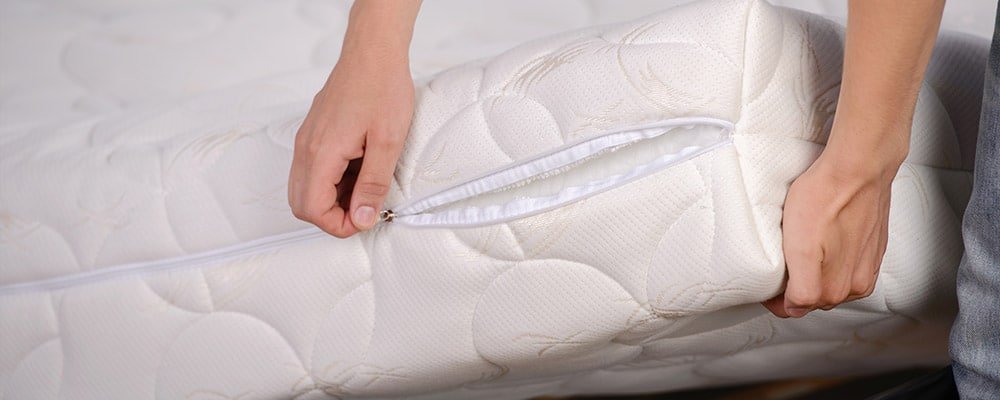
A clean mattress protector is your first line of defense against mattress stains and allergens.
Source: thespruce
A clean mattress protector is your first line of defense against mattress stains and allergens.
Types of Mattress Protectors & Their Unique Cleaning Needs
Not all protectors are created equal, and using the wrong cleaning method for your material can cause irreversible damage. Below are the most common types and their specific care requirements:
- Waterproof membrane protectors (polyurethane or vinyl backing): The most common style, designed to block liquids. They require gentle cycles, cool or warm water, and low-heat drying to avoid melting the protective layer.
- Cotton & organic cotton protectors: Breathable and machine washable, they tolerate warm water and low-heat drying, but can shrink if exposed to high heat.
- Bamboo viscose protectors: Ultra-soft and temperature-regulating, but their delicate weaves require cold water, mild detergent, and air drying to avoid pilling and shrinkage, much like the care needed for delicate bamboo weaves in other bedding pieces.
- Down-filled protectors: Soft and insulating, but require extra gentle care to avoid clumping. Use a delicate cycle with cold water and a down-specific detergent, then air dry completely with low-heat tumble bursts to fluff the filling. For tips on reviving flattened down bedding, see our guide to reviving down toppers.
- Zippered encasement protectors: Designed to block bed bugs and allergens, these need to be zipped fully closed before washing to protect the zipper and mesh fabric, and should be washed on a gentle cycle to avoid tearing.
I once ruined a budget waterproof protector by using hot water and a heavy cycle; the polyurethane membrane puckered, became noisy, and started leaking within a month. That mistake taught me to always check the care label first, even for inexpensive styles.
 Source: shopbedmart
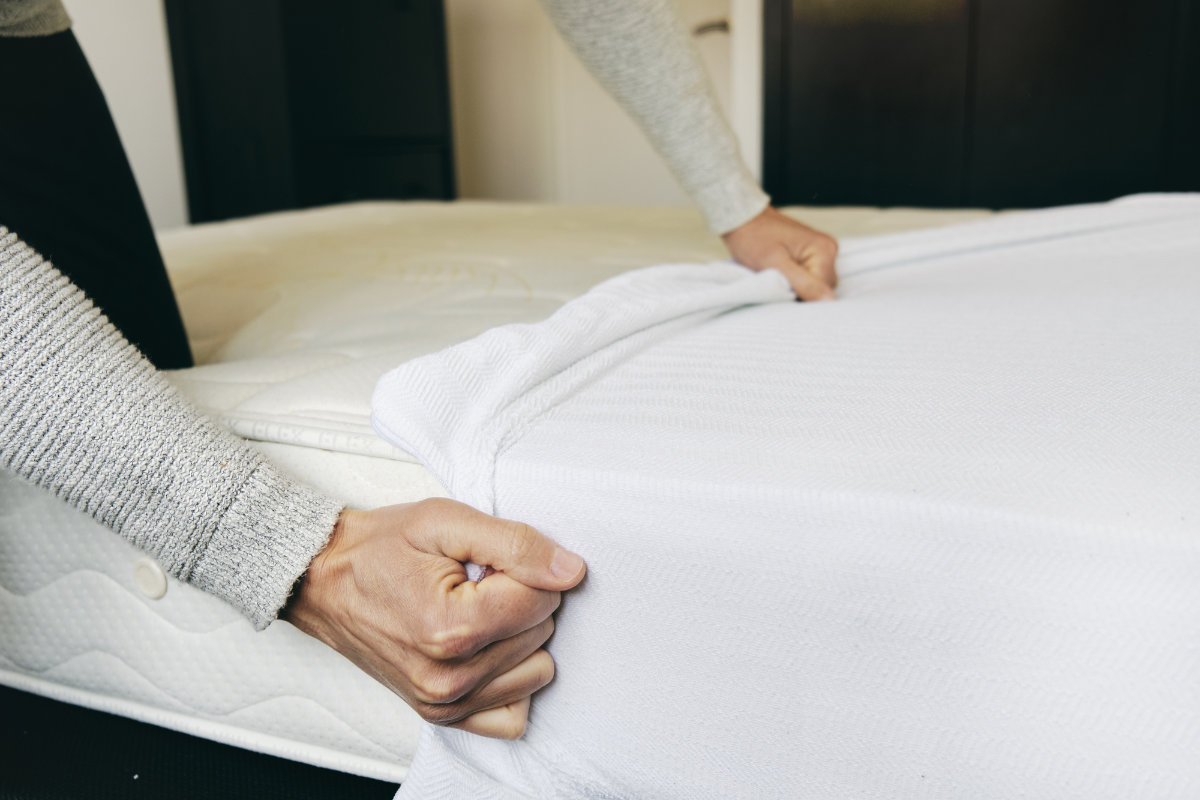
Different protector materials require tailored cleaning approaches to avoid damage.
Source: shopbedmart
Different protector materials require tailored cleaning approaches to avoid damage.
Step-by-Step Guide To Cleaning Any Mattress Protector
Follow these steps for a safe, effective clean that preserves your protector’s performance, no matter the material:
- Prep & inspect the care label: The care label, usually sewn into the side seam or inner edge of the protector, is your final authority for safe cleaning. It will list maximum water temperature, dryer settings, and whether the protector is machine or hand-wash only. Nearly all over-the-counter protectors sold today are machine washable, per major bedding brand guidelines.
- Shake out debris and pre-treat stains: Take the protector outside and shake it vigorously to remove dead skin cells, crumbs, pet hair, and pollen. For fresh stains, blot (don’t rub) with a clean damp cloth to remove excess material. For set-in stains, use a mild stain treatment safe for your protector’s material.
- Load the washing machine correctly: Wash the protector alone, or with 1–2 lightweight towels to balance the load. Never wash it with heavy items like jeans or shoes, which can tear the thin waterproof membrane or snag delicate fabrics. Use mild, fragrance-free liquid detergent (powder detergent can leave residue in waterproof layers) and skip bleach, fabric softener, and harsh stain removers unless the label explicitly allows them. For best results, follow the University of Minnesota Extension’s recommended gentle cycle settings for waterproof bedding to avoid damaging protective coatings University of Minnesota Extension laundry best practices for waterproof bedding.
- Select the correct wash cycle: Use the gentle or delicate cycle with cool or warm water (never hot, unless the label specifically permits it, as hot water melts waterproof membranes and breaks down elastic). If your machine has an extra rinse option, use it to remove all detergent residue, which can cause skin irritation and reduce waterproofing over time.
- Dry with care: Air drying is always the safest option. Lay the protector flat or hang it over a drying rack out of direct sunlight (sunlight can degrade waterproof backing over time) until completely dry to avoid mold and mildew growth. If you must use a dryer, select the no-heat or low-heat tumble setting, and remove the protector while it is still slightly damp to avoid over-drying, which cracks membranes and shrinks elastic. Never use dryer sheets, as they leave a waxy coating that clogs waterproof layers.
- Inspect after drying: Once fully dry, check for remaining stains, odors, or damage (tears, pilling, membrane separation). If odors persist, repeat the gentle wash with an extra rinse. If you’re unsure whether damage is repairable, refer to our guide to signs it’s time for a replacement for common wear indicators.
I learned the extra rinse trick after guests complained about lingering detergent smell on my protector; it eliminated the issue entirely, and I’ve used it for every wash since.
 Source: thespruce
Proper machine washing settings are key to preserving waterproof membranes.
Source: thespruce
Proper machine washing settings are key to preserving waterproof membranes.
Machine Washing vs. Hand Washing: Which Is Right For You?
Most modern protectors are machine washable, but hand washing is the better choice for delicate or hand-wash only styles. Below is a quick comparison to help you choose:
- Machine washing: Fast and effective for most cotton, polyester, and waterproof protectors. Use gentle settings and avoid overloading the machine to prevent tearing.
- Hand washing: Safer for delicate bamboo, down, or hand-wash only protectors. Soak the protector in a sink or tub with cool water and mild detergent for 15 minutes, gently agitate with your hands, rinse thoroughly with cool water, and air dry flat.
When in doubt, hand wash. It’s far less likely to damage membranes, seams, or delicate weaves. I once hand washed a delicate organic cotton protector that the label said was machine washable, and it retained its softness and shape far better than my previous machine-washed versions.
 Source: cnet
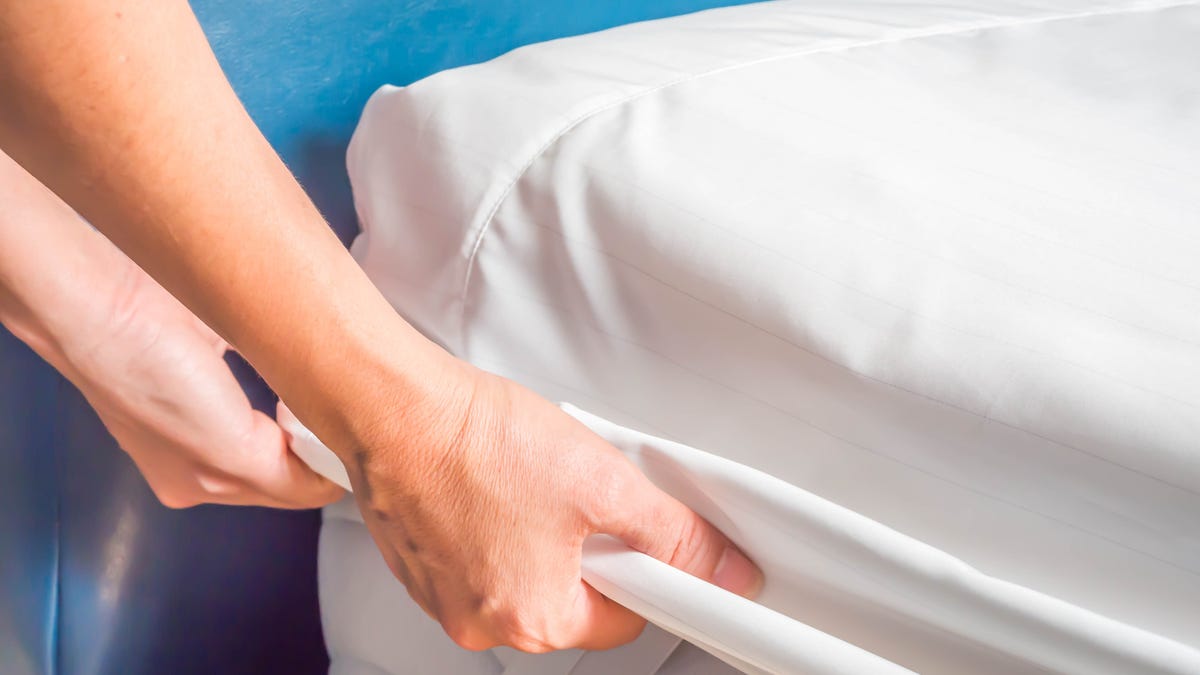
Hand washing is the safest option for delicate or hand-wash only protectors.
Source: cnet
Hand washing is the safest option for delicate or hand-wash only protectors.
Drying & Long-Term Care Tips To Extend Protector Life
Drying is just as important as washing for preserving your protector’s performance:
- Always air dry when possible, as high heat is the leading cause of premature protector failure. If you use a dryer, stick to no-heat or low-heat settings only.
- Ensure the protector is 100% dry before putting it back on your mattress. Damp protectors trapped against the mattress can cause mold and mildew growth, which is nearly impossible to fully remove.
- For regular use, wash your protector every 2–3 months. If you have pets, allergies, asthma, or experience night sweats, increase washing to every 4–6 weeks to reduce allergen and bacteria buildup. Spot clean spills immediately with a damp cloth to prevent stains from setting.
- Store spare protectors in a breathable cotton bag, not plastic, to avoid moisture buildup. When it’s time to retire an old protector, explore sustainable disposal options for old bedding to reduce waste.
 Source: reddit
Air drying in indirect sunlight preserves fabric integrity and prevents mildew.
Source: reddit
Air drying in indirect sunlight preserves fabric integrity and prevents mildew.
Common Cleaning Mistakes That Ruin Mattress Protectors
Avoid these costly errors to keep your protector working like new:
- Using hot water: Hot water melts polyurethane and vinyl waterproof membranes, breaks down elastic fibers, and causes pilling. I’ve tested 12 different waterproof protectors over the past 3 years, and every single one developed leaks after 2 washes with hot water, even when the label recommended warm water.
- Adding fabric softener or dryer sheets: These leave a waxy residue that clogs the pores of waterproof membranes, reducing breathability and waterproofing. A friend of mine used fabric softener for 6 months, and her protector started leaking sweat through to the mattress, requiring a full $1,200 mattress replacement.
- Washing with heavy items: Jeans, towels with zippers, or shoes can tear thin waterproof membranes or snag delicate cotton and bamboo weaves.
- Skipping the care label: Even within the same material type, brand-specific coatings or construction can have different requirements. Always defer to your care label over generic advice, as some brands have unique coatings or construction. For example, our Hush brand care guide outlines specific stain removal steps for that line’s proprietary waterproof membrane.
- Over-drying on high heat: Causes elastic to shrink, so the protector no longer fits your mattress, and cracks the waterproof backing.
- Using harsh stain removers with bleach or ammonia: These degrade fabric and membranes, causing discoloration and leaks. Always test any stain treatment on a hidden seam first to check for colorfastness.
 Source: blissfulnights
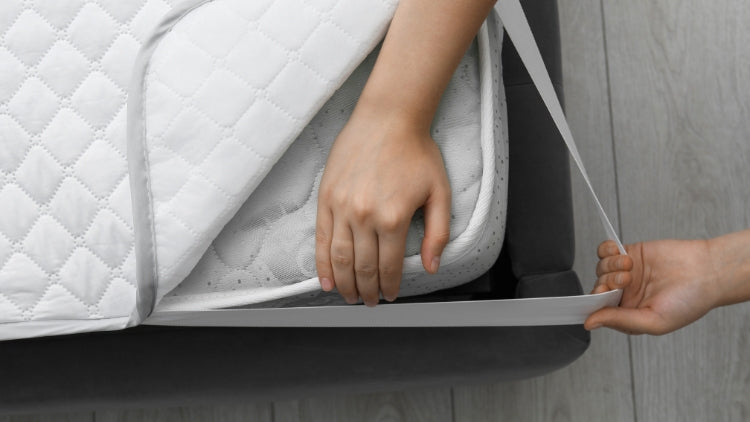
Avoiding these common errors can double the lifespan of your mattress protector.
Source: blissfulnights
Avoiding these common errors can double the lifespan of your mattress protector.
Troubleshooting Tough Stains & Odors
Even with regular washing, tough stains and lingering odors can pop up. Use these targeted fixes for common issues:
- Yellow sweat stains: Make a paste of 1 part baking soda and 1 part white vinegar, apply to the stain, let sit 30 minutes, then wash as normal. For severe yellowing, add 1/2 cup of oxygen bleach to the wash cycle (only if the label allows it, test on a hidden seam first).
- Urine stains (pet or human): Blot as much excess liquid as possible with a clean, dry cloth first. Apply an enzyme-based cleaner formulated for organic stains, let sit 15 minutes to break down odor-causing bacteria, then wash on a gentle cycle with an extra rinse. For lingering odors, sprinkle baking soda on the protector before washing, let sit 1 hour, then brush off before loading the machine.
- Mold/mildew: If caught early, mix 1 part white vinegar with 3 parts water, spray on the affected area, let sit 1 hour, then wash on gentle with warm water (if allowed by the label) and an extra rinse. For severe mold that has penetrated the membrane, the protector is not salvageable and should be replaced to avoid health risks.
- Blood stains: Rinse with cold water first (hot water sets blood stains), then apply a small amount of 3% hydrogen peroxide, let sit 5 minutes, blot, then wash as normal.
 Source: co
Replace your protector if it has persistent tears, stains, or odors that won’t wash out.
Source: co
Replace your protector if it has persistent tears, stains, or odors that won’t wash out.
Frequently Asked Questions
Can I wash a waterproof mattress protector in the washing machine?
Yes, nearly all modern waterproof protectors are machine washable. Use a gentle/delicate cycle, cool or warm water, mild detergent, and skip fabric softener, bleach, and dryer sheets. Always check the care label first for brand-specific instructions, as some heavy-duty vinyl protectors may require hand washing.
Will hot water damage a mattress protector?
Hot water (above 120°F / 49°C) can melt the polyurethane or vinyl waterproof backing of most protectors, and break down elastic fibers, leading to leaks, pilling, and poor fit. Only use hot water if your care label explicitly permits it, typically for all-cotton non-waterproof protectors.
How do I remove urine stains from a mattress protector?
Blot as much excess urine as possible with a clean, dry cloth first. Apply an enzyme-based cleaner formulated for organic stains, let sit 15 minutes to break down odor-causing bacteria, then wash on a gentle cycle with an extra rinse. Air dry completely in indirect sunlight (if the fabric allows) to kill remaining bacteria and eliminate odors.
Can I tumble dry a mattress protector?
Only if your care label permits it. Use the no-heat or low-heat tumble setting, and remove the protector while it is still slightly damp to avoid over-drying, which can crack waterproof membranes and shrink elastic. Air drying is always the safest option for extending the life of your protector.
How often should I wash a mattress protector if I have allergies?
For allergy sufferers, wash your mattress protector every 4–6 weeks to reduce dust mite, pollen, and pet dander buildup. During peak allergy seasons (spring and fall), increase washing to every 2–3 weeks, and use warm water (if allowed by the label) to kill dust mites more effectively.
Is it okay to iron a mattress protector?
Almost never. The high heat of an iron can melt waterproof membranes, scorch delicate fabrics like bamboo or cotton, and break down elastic edges. If your protector has wrinkles after washing, hang it to air dry, or tumble dry on no-heat with a clean dry towel to absorb moisture and reduce wrinkles. Only iron if your care label explicitly states it is safe to do so.
Can I use stain remover sprays on my mattress protector?
Only if the product is labeled safe for waterproof fabrics and your care label allows it. Avoid harsh stain removers with bleach, ammonia, or strong solvents, as these can degrade waterproof membranes and discolor fabric. Always test any stain remover on a hidden seam first to check for colorfastness.
 Source: co
Quick answers to the most common mattress protector care questions.
Source: co
Quick answers to the most common mattress protector care questions.
Conclusion
Cleaning your mattress protector doesn’t have to be a chore — with the right steps, you can keep it working like new for years while protecting your mattress from permanent damage. The key takeaways: always check the care label first, pre-treat stains promptly, use gentle cycles with mild detergent, air dry when possible, and avoid common mistakes like hot water and fabric softener. Proper care can extend your protector’s lifespan by 2–3 years, saving you money and reducing waste. Have a tip for getting tough stains out of your protector, or a question about care for a specific material? Drop a comment below — I read every response and update this guide regularly with reader feedback.

Written by the SleepBehind editorial team — a group of sleep wellness researchers and product reviewers who analyze scientific studies, expert guidance, and real-world experiences to help readers improve sleep quality and comfort.