
How to Clean Baby Spit Up From a Mattress comes down to one thing: did the milk reach the mattress core? A fresh surface spill may need only blotting and airflow. A soaked cover or foam core needs a different cleanup path.
U.S. crib mattress requirements in 16 CFR Part 1210 cover dimensions, firmness, fit, and surface characteristics. Those replacement rules matter after contamination. As of 2026, start by identifying whether you have a surface spill, a soaked removable layer, or possible core saturation.
How to Clean Baby Spit Up From a Mattress: Easy Steps

Image source: Web (Bing) / shopee.com.my (Web image (fair-use with source credit))
Quick Answer
How to Clean Baby Spit Up From a Mattress? Check the care instructions. Remove wet bedding, then blot from the outside inward.
Clean only compatible layers, remove all cleaner, and let everything dry fully. Replace a soaked core that stays wet or smells musty.
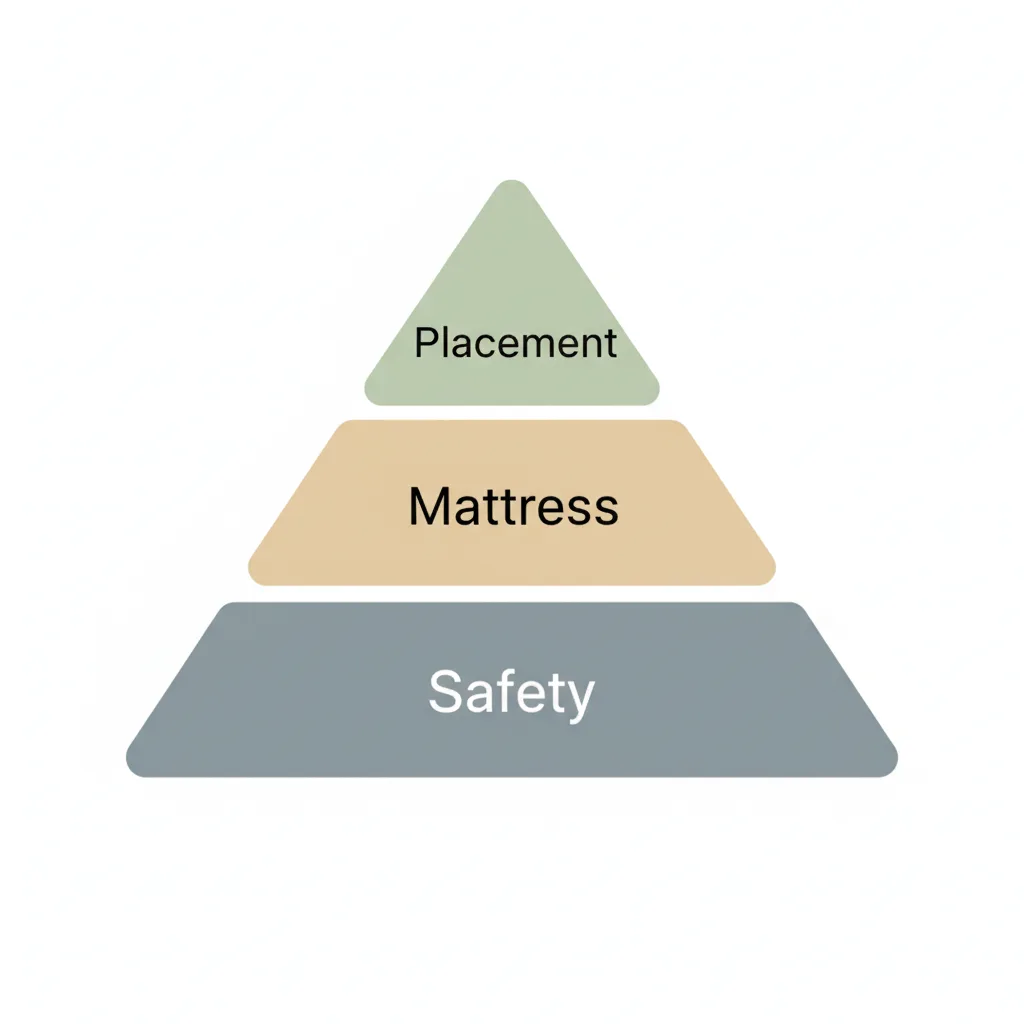
Image source: Bing (Web (fair-use with source credit))
Why Baby Spit-Up Leaves a Deeper Cleanup Problem Than It Looks
Milk often wicks beneath a fitted sheet and travels along stitched seams. A mattress protector may stop most liquid, but its edges and openings can still channel moisture toward the mattress.
Core saturation means liquid has passed through the surface and waterproof barrier. It has reached the foam, latex, or internal comfort layer beneath the finished cover.
| Spill level | What it means | Best next move |
|---|---|---|
| Surface spill | Liquid stopped at the mattress finish or waterproof barrier | Blot and spot-clean |
| Wet cover or pad | A removable layer is saturated | Remove and clean it according to its label |
| Core saturation | Liquid has entered foam, latex, or another internal layer | Dry cautiously and inspect for persistent odor |
| Contaminated core | Moisture or residue remains inside | Replace the mattress |
Foam and latex can draw liquid deeper and hold it for long periods. Innerspring mattresses may release more water, but their foam comfort layers and seams can stay damp.
Waterproof barriers help, but tufting, piping, and sewn edges can remain weak points. If a porous core stays wet or shows mold, replacement is usually safer. The EPA notes that porous materials can be difficult to fully remediate after moisture enters them.
Step-by-Step: Remove the Milk Without Spreading It or Soaking the Core
Work from the outside inward and use the least moisture needed. Start after moving the baby to a clean, firm, flat sleep surface away from the spill.
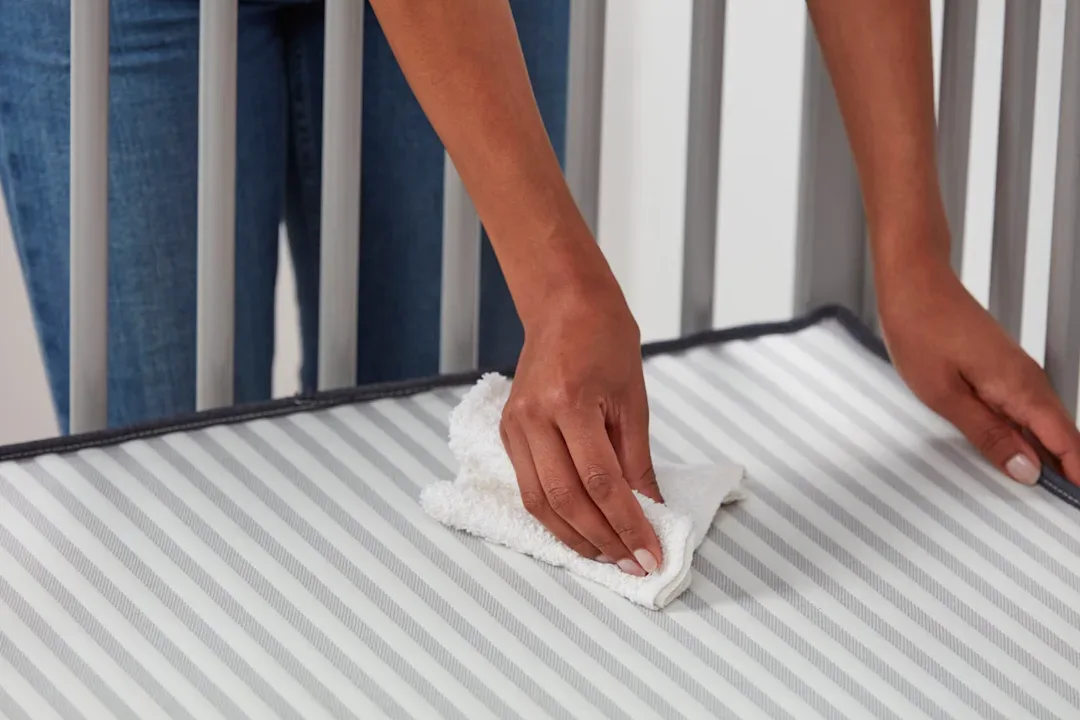
Image source: Web (Bing) / clorox.com (Web image (fair-use with source credit))
Gather the essentials
You’ll need clean, dry towels or paper towels. Set out rubber gloves, a bowl, clean damp cloths, and a fan.
Use a detergent or cleaner only if the care label approves it. A dehumidifier can help in a humid room, but keep the baby elsewhere during cleanup.
Remove and contain the spill
Remove every wet layer that can be lifted from the mattress. Take off the fitted sheet, mattress protector, and loose pad in that order.
Read every care label. Check the mattress, cover, and pad before applying water or cleaner. Different layers may have different wash and drying instructions.
Contain the wet area. Place a dry towel around the spill if needed. Don’t press or rub milk deeper into the mattress.
Blot from the outside inward. Use clean, dry, absorbent cloths or paper towels. Replace a damp cloth often and continue until no fresh milk appears.
Treat dried milk gently. If damp cleaning is allowed, place a lightly wrung cloth over the residue. Leave it for the cleaner’s stated contact time, then blot without scrubbing.
Clean removable layers separately. Machine-wash or hand-wash a waterproof cover only when its instructions allow it. Let the cover dry fully before refitting.
Wipe the mattress surface. Put a small amount of approved cleaner on a clean cloth. Don’t spray or pour it directly onto seams, tufting, handles, or openings.
Remove cleaner and milk residue. Wipe with a clean, lightly damp cloth if the care label allows. Don’t soak foam or flood an innerspring unit.
Dry before use. Refit the sheet and protector only after every layer feels dry and has no sour or musty odor.
If only the sheet or protector is wet, stop there once those layers are clean and dry. A fresh surface spill usually doesn’t justify soaking the whole mattress.
Which Cleaning Method Works for Your Mattress?
The safest method matches the mattress layer and its care label. There’s no universal cleaner, dilution, or wash setting for every mattress.
| Mattress component | Best first choice | Avoid |
|---|---|---|
| Machine-washable waterproof cover | Label-directed machine wash | Unapproved bleach, heat, or fabric softener |
| Foam or latex surface | Dry cleaning, then controlled damp cleaning if approved | Soaking, scrubbing, or steaming |
| Innerspring or hybrid surface | Limited surface cleaning around the finish and edges | Flooding the core or bending the unit |
| Waterproof mattress pad | Removal and label-directed laundering | Wringing, twisting, or machine-drying foam |
| Persistent odor | Removal of the contaminated source | Fragrance or baking soda applied over the problem |
Are detergents, enzyme cleaners, and odor treatments interchangeable?
No. Detergent removes residue, while an enzyme cleaner targets proteins. An odor treatment only controls smell and doesn’t remove trapped milk.
Use a mild, manufacturer-approved detergent on compatible surfaces. An enzyme cleaner may help with stubborn milk residue, but only if the mattress instructions permit it.
Baking soda can absorb fresh moisture from a removable cover. It can’t clean dried milk inside foam or replace a wet, musty mattress.
Can vinegar or baking soda replace approved cleaner?
No. Neither product is a safe default for an unknown mattress surface. Apply vinegar only when the care instructions specifically approve it.
Use the stated dilution and contact time. Apply the solution to a cloth rather than the mattress, then remove any remaining residue with a clean damp cloth.
Test a cleaner on a hidden area first if the manufacturer recommends it. Stop if you notice fading, stiffness, discoloration, or a damaged coating.
Does a disinfectant replace normal cleaning?
No. Most spit-up calls for detergent-compatible cleaning rather than disinfection. Food residue can reduce a disinfectant’s effectiveness, so you must clean the surface first if one is truly required.
Follow the product label for dilution and contact time. Don’t combine a disinfectant with another cleaner unless its instructions allow that exact combination.
Drying a Soaked Mattress: Airflow, Fan, or Dehumidifier?
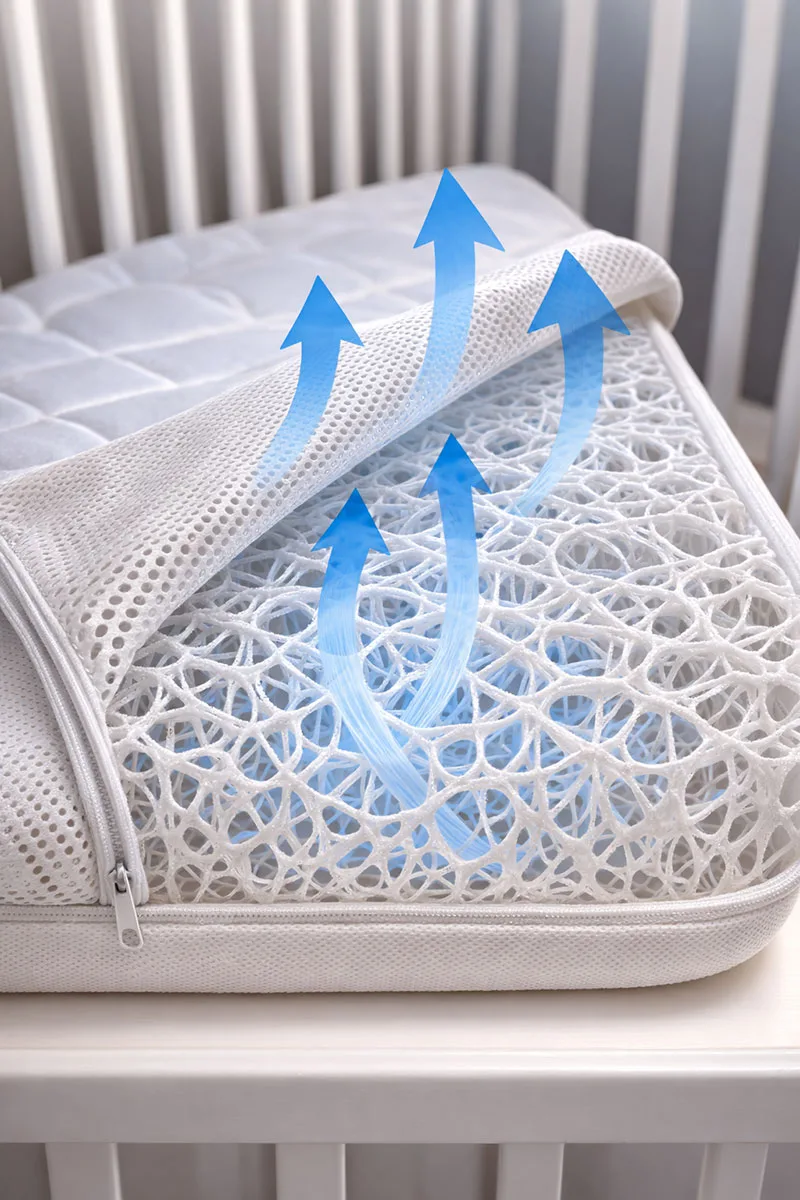
Image source: Web (Bing) / unique-baby-gear-ideas.com (Web image (fair-use with source credit))
There’s no reliable fixed drying time for every mattress. A light surface spill may dry within hours, while a soaked core can take a day or several days.
| Condition | Practical planning estimate | Before putting it back in use |
|---|---|---|
| Light surface spill | Several hours with strong airflow | The surface feels dry and room-temperature |
| Wet cover or pad | Follow the label and allow a full drying period | Every layer is completely dry |
| Possible core saturation | A day or several days | No coolness, dampness, or musty odor remains |
These are planning estimates, not guarantees. Foam density, humidity, airflow, and the amount of liquid all affect the result.
What’s the safest way to speed up drying?
Remove every wet layer and leave the mattress uncovered. Aim a fan across the full surface and use a dehumidifier if the room remains humid.
If the manufacturer allows it, stand the mattress on its side in a ventilated area. Make sure it’s stable and doesn’t crease foam or damage the innerspring unit.
Dry removable covers according to their labels. Don’t use a hair dryer, space heater, or steam cleaner unless the manufacturer explicitly permits it.
How can you check for hidden moisture?
Check the center, edges, tufting, piping, and seams several times during drying. Press a clean, dry towel against each area and look for damp marks.
Coolness, dampness, or a sour odor means the mattress needs more drying. A dry top surface doesn’t prove that foam underneath is dry.
If a musty odor remains after thorough airflow and drying, keep the mattress out of use. Replace it rather than covering the odor with another protector.
Mistakes That Can Damage the Mattress or Put the Baby at Risk
The fastest way to damage a mattress is to use too much liquid or the wrong cleaner. Gentle blotting and complete drying protect both the mattress and the baby.
Which cleaning mistakes cause the most damage?
Scrubbing, soaking, steaming, and unapproved cleaners cause most avoidable damage.
| Common mistake | What goes wrong | Better approach |
|---|---|---|
| Rubbing or scrubbing | Spreads residue and damages fibers | Blot from the outside inward |
| Flooding the mattress | Moisture can remain trapped inside | Use a lightly damp cloth |
| Steaming or applying high heat | May set residue or damage layers | Use airflow and controlled drying |
| Ignoring the care label | Can damage the finish or void the warranty | Follow product directions |
| Masking an odor | Traps contamination under a protector | Remove the contaminated source |
| Refitting damp bedding | Keeps the core exposed to moisture | Wait until every layer is dry |
Which cleaner combinations are dangerous?
Never mix bleach with vinegar, ammonia, or another cleaner. Some combinations release toxic gases or leave irritating residue.
Use one approved product at a time and follow its label. Keep cleaning products out of the baby’s reach and wash your hands after handling them.
When does spit-up need medical attention?
Call a pediatrician if spit-up becomes frequent, worsens, or comes with poor feeding, weight loss, pain, or dehydration. Projectile, bloody, or green vomit needs prompt medical care.
Mild spit-up can be common in early infancy. Cleaning removes the spill, but it can’t treat reflux illness, an obstruction, or another medical cause.
When must the baby stay off the mattress?
Keep the baby off the mattress whenever any part feels damp, has cleaner residue, or carries a persistent odor. Move them to a firm, flat, snug-fitting sleep surface instead.
The CPSC’s crib guidance advises keeping babies on a firm, flat, snug-fitting sleep surface. Don’t add loose pads, toppers, bumpers, quilts, or pillows.
Final Decision: Protect the Mattress, Clean It, or Replace It
Choose your next step based on how deeply the milk reached the mattress. Appearance alone can be misleading, so check the cover, seams, center, and edges.
When can careful cleaning solve the problem?
Careful cleaning is enough when liquid stopped at the surface or a removable cover. The mattress should feel dry and normal in temperature after drying.
A light spill doesn’t automatically require replacement. Prompt blotting, controlled cleaning, and good airflow can restore many mattresses.
When is replacement the safer choice?
Replace the mattress when its porous core stays wet or smells sour after thorough drying. Visible mold, persistent contamination, or damage from soaking are also strong reasons to discard it.
Don’t rely on fragrance, baking soda, or another protector to hide contamination. Those steps can trap moisture and leave the baby exposed to an unclean surface.
What replacement mattress should you choose?
Choose a firm, flat, snug-fitting mattress approved for the sleep product. Match its dimensions and shape to the crib, bassinet, or travel system.
Check the manufacturer’s care requirements and warranty before purchasing. A replacement should fit properly without gaps, bunching, or compression along an edge.
How do you reduce future contamination?
Use a fitted, manufacturer-approved mattress protector and inspect it for tears or loose seams. A burp cloth during feeding can catch most small spills.
Clean fresh spots immediately and keep wet bedding out of the sleep area. Let damp surfaces dry fully before covering them again.
Frequently Asked Questions
Can you use vinegar on a baby mattress?
Yes, but only if the mattress manufacturer’s care instructions allow it. Apply the approved dilution to a cloth, not directly to the mattress. Wipe the area with a clean damp cloth afterward.
Never mix vinegar with bleach or ammonia, and don’t use it on an unapproved foam surface.
Does baking soda remove milk smell from a mattress?
No. Baking soda may absorb fresh moisture, but it can’t remove dried milk from foam or a soaked core. Clean approved removable layers, remove residue, and improve airflow.
If the dry mattress still has a sour or musty smell, replace it.
Should you replace a foam mattress after a spit-up?
Replace the mattress if the foam stays damp or smells musty after thorough drying. Milk can move beneath the waterproof cover and remain trapped inside foam. Keep the mattress out of use until you have a firm, flat, clean sleep surface for the baby.
Can you machine-wash a mattress cover?
Only wash the cover if its care label allows machine washing. Remove it from the mattress and follow the stated temperature and cycle. Let it dry fully before refitting.
Don’t machine-wash the mattress core, even if the cover is washable.
How long does a soaked mattress take to dry?
There isn’t a reliable fixed drying time. A light surface spill may dry within hours, while a soaked core can take a day or several days. Use airflow and humidity control, then check the center, edges, and seams.
Don’t use the mattress until every layer feels dry and has no odor.
When should you call a doctor instead of treating the stain?
Call a pediatrician for frequent or worsening spit-up, especially with poor feeding, weight loss, pain, or dehydration. Projectile, bloody, or green vomit needs prompt medical care. Cleaning can remove the spill, but it can’t address reflux illness, an obstruction, or another medical cause.

Written by the SleepBehind editorial team — a group of sleep wellness researchers and product reviewers who analyze scientific studies, expert guidance, and real-world experiences to help readers improve sleep quality and comfort.