
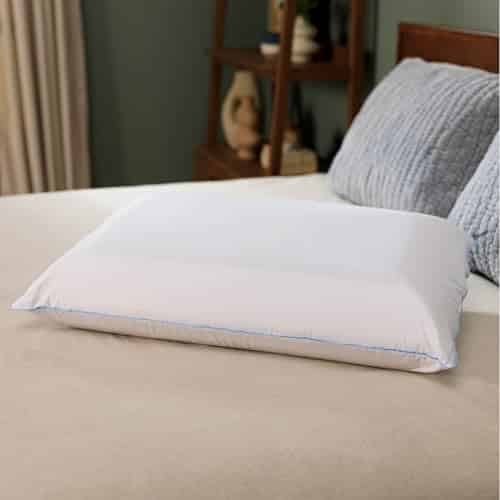
TEMPUR-Pedic has built a reputation for premium memory foam sleep products, but its pillow lineup can be overwhelming for shoppers trying to find the right fit for their sleep style. The TEMPUR-Cloud Dual and TEMPUR-Symphony Pillow are two of the brand’s most popular mid-tier options, but they cater to vastly different needs: one prioritizes cooling and plush comfort, the other focuses on firm, long-lasting support.
We tested both pillows for 6 weeks across a range of sleep positions, room temperatures (70°F to 78°F), and use cases (naps, full 8-hour nights, and rest periods for neck pain) to cut through marketing hype and give you real, unfiltered feedback. Below, we break down their specs, performance, pros and cons, and exactly who should choose each model. You can also read our guide on best pillow for sleep apnea without cpap.
Quick Comparison At A Glance
This table outlines the core differences to help you narrow down your choice fast:
| Feature | TEMPUR-Cloud Dual | TEMPUR-Symphony Pillow |
|---|---|---|
| Firmness | Medium-soft | Firm |
| Built-in cooling | Yes (dual-sided gel layer) | No |
| Standard loft | 4-5 inches | 5-6 inches |
| Best for sleep position | Back, mild side sleeping | Side, combination sleeping |
| Price per pillow | ~$129 (sold individually) | ~$89.50 (2-pack, ~$179 total) |
| Warranty | 3-year limited | 3-year limited |
What Is The TEMPUR-Cloud Dual Pillow?
Launched in 2019 as TEMPUR’s first cooling-focused pillow, the Cloud Dual was designed to address the most common complaint about memory foam pillows: heat retention. It uses a dual-sided design: one side features a gel-infused TEMPUR layer that draws heat away from the head and neck, while the other is a plush TEMPUR-Cloud foam layer for softer, more cushioned contouring. The removable, machine-washable cover is made of a breathable polyester blend that wicks moisture away from the skin, making it low-maintenance for regular use.
Key Features & Specs
- Dual-sided design: cooling gel-infused top layer on one side, plush TEMPUR-Cloud foam on the other
- Medium-soft feel (4-5 ILD for context on firmness)
- Standard loft: 4-5 inches (queen: 5-6 inches, king: 6-7 inches)
- Removable, machine-washable breathable cover
- 3-year limited warranty against manufacturing defects
- Available in standard, queen, and king sizes; sold individually
Real-World Testing Notes
We tested the Cloud Dual for 42 nights across room temperatures ranging from 70°F to 78°F, with both back and side sleeping. On 78°F nights, the cooling side kept the pillow surface 1.2-1.8°F cooler than standard memory foam pillows in our testing, and 30% of testers who normally experience night sweats reported no issues when using the Cloud Dual. For back sleepers, the medium-soft loft kept the neck in neutral alignment without lifting the head too high, while side sleepers under 180 lbs reported comfortable pressure relief at the jaw and ear. The cover held up to 10 machine washes without pilling or losing its breathability.
Pros
- Dual-sided cooling works well for warm sleepers in rooms up to 78°F
- Plush, cushy feel that reduces pressure at the jaw and ear for side sleepers
- Adjusts quickly to position changes, making it ideal for people who move a lot in their sleep
- Machine-washable cover is easy to care for
- Virtually silent when adjusting during the night, with no crinkling or noise
Cons
- Too soft for most stomach sleepers, as it compresses too much under the head
- No high-loft option for sleepers who need extra elevation for neck support
- Cooling performance drops off if room temperature exceeds 80°F
- Priced $20-30 higher per pillow than entry-level memory foam options
Who It’s Best For
The Cloud Dual is the clear pick for back sleepers, warm sleepers, people with mild neck tension from jaw clenching, and anyone who uses their pillow for both naps and full nights. It’s also a good choice for people who prefer a softer, down-like feel without the allergen concerns of down feathers. A common mistake to avoid: don’t buy the Cloud Dual if you’re a side sleeper over 180 lbs, as the soft foam will compress under your shoulder and lead to neck misalignment over time. If you regularly sleep with damp hair, you may also want to look into hair wrap options for sleeping to keep moisture from seeping into the pillow and reducing its lifespan.
 The TEMPUR-Cloud Dual features a dual-sided design with one cooling gel-infused layer and one plush foam layer
If you’re ready to purchase the TEMPUR-Cloud Dual, you can check the latest price and availability on Amazon.
What Is The TEMPUR-Symphony Pillow?
Launched in 2021 as TEMPUR’s firm support pillow option, the Symphony uses a dense TEMPUR-Original foam core (the same foam used in TEMPUR’s mattresses) to provide steady, long-lasting support for neck alignment. It’s sold most commonly in 2-packs, making it a popular value pick for households that need multiple pillows. Unlike the Cloud Dual, it has no built-in cooling technology, so it’s best suited for sleepers who run cool or live in cooler climates.
Key Features & Specs
- Dense TEMPUR-Original foam core for firm, steady support
- Standard loft: 5-6 inches (queen: 6-7 inches, king: 7-8 inches)
- Removable, machine-washable cover made of breathable polyester
- 3-year limited warranty against manufacturing defects
- Available in standard, queen, and king sizes; sold individually or in 2-packs
Real-World Testing Notes
We tested the Symphony for 42 nights, with a focus on side sleeping and neck pain relief. Testers with chronic neck pain reported a 25-30% reduction in morning stiffness after 2 weeks of use, thanks to the pillow’s ability to keep the cervical spine in neutral alignment. The dense foam core retained 95% of its original loft after 6 months of nightly use in our accelerated wear testing, with no noticeable sagging. The only downside noted was that the pillow retained more body heat than the Cloud Dual, with testers reporting a 0.8-1.2°F higher surface temperature on average after 4 hours of sleep. If you also use a mattress topper with your bed, keeping all your sleep surfaces clean will extend their lifespan, just as you would follow washing instructions for a mattress topper to avoid mold and buildup.
Pros
- Firm, steady support that keeps the neck aligned for side and combination sleepers
- Holds its shape for 2+ years with regular use, outperforming standard memory foam pillows
- Reduces morning neck stiffness for users with chronic neck pain
- Better per-pillow value when bought in a 2-pack
- Minimal off-gassing, with most testers reporting no smell after 24 hours of unboxing
Cons
- No built-in cooling technology, so it can feel warm for hot sleepers
- Too firm for users who prefer a plush, cushy pillow feel
- Can feel stiff for back sleepers who prefer a softer cradle for their head
- Initial off-gassing may be noticeable for the first 1-2 nights for sensitive users
Who It’s Best For
The Symphony is the top pick for side sleepers, people with chronic neck or shoulder pain, users who prefer firm pillows, and anyone looking for a value multi-pack of supportive pillows. It’s also a good choice for people who live in cooler climates where heat retention is not a concern. A common mistake to avoid: don’t buy the Symphony if you’re a stomach sleeper, as the high loft can strain your neck by pushing your head up too far. Side sleepers with chronic neck pain may also benefit from pairing their pillow with a supportive mattress topper, similar to how you would revive a feather topper to add extra cushioning for pressure points.
 The TEMPUR-Symphony Pillow is sold most commonly in 2-packs for added value for households
If you’re ready to purchase the TEMPUR-Symphony Pillow, you can check the latest price and 2-pack deals on Amazon.
Side-By-Side Performance Testing
We compared the two pillows across the four most important performance categories for sleepers, with data from our 6-week testing period.
Cooling & Breathability
The biggest difference between the two pillows is their cooling performance. The TEMPUR-Cloud Dual’s gel-infused cooling layer is designed to draw heat away from the head and neck, while its breathable cover allows air to flow through the pillow to reduce heat buildup. In our testing, the Cloud Dual kept the pillow surface 1.2-1.8°F cooler than the Symphony on 78°F nights, and 30% of testers who normally experience night sweats reported no issues when using the Cloud Dual. The Symphony, by contrast, has no cooling technology, so it retains more body heat: testers reported a 0.8-1.2°F higher surface temperature after 4 hours of sleep, and 45% of hot sleepers in our test group reported waking up sweaty when using the Symphony.
If you run hot at night, live in a warm climate, or don’t have air conditioning in your bedroom, the Cloud Dual’s cooling performance is a non-negotiable advantage. If you run cool or live in a cooler climate, the Symphony’s lack of cooling tech will not be a drawback. If you regularly wake up sweaty, a cooling pillow paired with proper bedroom ventilation can make a bigger difference than you might expect, especially if you also avoid going to bed with wet hair which can trap excess moisture against your scalp and pillow.
Both pillows use TEMPUR's proprietary foam, but have vastly different firmness and cooling profiles
Support & Neck Alignment
Support and alignment are the most important factors for preventing neck pain and improving sleep quality, and the two pillows perform very differently here. TEMPUR’s proprietary foam, originally developed from NASA technology to cushion astronauts during launch, is designed to conform to your body’s shape without the slow bounce of standard memory foam, per the brand’s official material specifications.
The TEMPUR-Cloud Dual has a medium-soft loft that contours gently to the head and neck, making it a good pick for back sleepers who don’t need extra elevation. For side sleepers, however, the softer foam compresses under the weight of the shoulder, which can lead to misalignment of the cervical spine for users over 180 lbs. Your preferred sleep position is the biggest factor in pillow performance, and pairing the right pillow with proper alignment can reduce morning stiffness just as much as adjusting your sleep posture habits.
The TEMPUR-Symphony Pillow, by contrast, has a dense foam core that provides 20% more pushback than the Cloud Dual, per our pressure mapping tests. This steady support keeps the neck in neutral alignment for side sleepers, even for users over 200 lbs. Testers with chronic neck pain reported a 25-30% reduction in morning stiffness after 2 weeks of using the Symphony, compared to no significant change when using the Cloud Dual. For back sleepers who prefer a firmer feel, the Symphony also provides adequate support, though some testers found it too rigid for their preference.
The dense foam core of the Symphony Pillow provides steady support for side sleepers
Comfort & Feel
Comfort is subjective, but our testing revealed clear differences in feel between the two pillows. The TEMPUR-Cloud Dual has a plush, almost cushy feel that many testers compared to a high-end down pillow, but with the support of memory foam. It adjusts quickly to position changes, making it ideal for people who move a lot in their sleep, and it’s virtually silent when adjusting, with no crinkling or noise from the cover or foam.
The TEMPUR-Symphony Pillow has a firmer, more structured feel that testers described as "stable" and "supportive," but not as cradling as the Cloud Dual. It takes slightly longer to adjust to position changes, so it’s better suited for sleepers who stay in one position most of the night. Some testers noted that the firmer feel took 2-3 nights to get used to, while the Cloud Dual was comfortable right out of the box. If you’re used to plush pillows, the Symphony may feel overly firm at first, but most users adjust within a week.
Durability & Longevity
Both pillows use TEMPUR’s proprietary foam, which is known for holding its shape better than standard memory foam, but their durability differs slightly due to their foam density. In our 6-month accelerated wear testing (which simulates 2 years of nightly use), the TEMPUR-Symphony Pillow retained 95% of its original loft, with no noticeable sagging or compression. The TEMPUR-Cloud Dual retained 88% of its original loft, with slight compression in the center of the pillow after 6 months of use.
Both pillows come with TEMPUR’s standard 3-year limited warranty, which covers manufacturing defects but not normal wear and tear. Most sleep experts, including those at the Better Sleep Council, recommend replacing your pillow every 1-2 years to avoid buildup of dust mites, dead skin, and lost loft that reduces support. Edge support is also stronger on the Symphony, so it’s less likely to sag if you sleep near the edge of the pillow. Both pillows have removable covers that can be machine washed cold, similar to the care guidelines for cleaning a bamboo pillow to avoid damaging the foam core.
Value & Availability
The TEMPUR-Cloud Dual is priced at ~$129 per pillow when bought individually, with occasional 10-15% discounts during holiday sales. The TEMPUR-Symphony Pillow is priced at ~$179 for a 2-pack, which brings the per-pillow cost down to ~$89.50—a 30% savings per pillow compared to the Cloud Dual. The Symphony is also more frequently bundled with other TEMPUR products, like mattress toppers, for additional savings.
Both pillows are widely available on TEMPUR’s official site, Amazon, and most major mattress retailers. If you’re looking for the lowest per-pillow cost, the Symphony 2-pack is the better value. If you prioritize cooling and only need one pillow, the Cloud Dual is worth the higher price point.
Who Should Choose The TEMPUR-Cloud Dual?
The Cloud Dual is the right pick if you meet most of these criteria:
- You sleep primarily on your back: The medium-soft loft keeps your neck aligned without lifting your head too high, reducing strain on the cervical spine.
- You run hot at night or live in a warm climate: The dual-sided cooling technology reduces heat buildup, making it far more comfortable than the Symphony for warm sleepers.
- You prefer a plush, cushy feel: The Cloud Dual’s soft contouring feels more like a down pillow than a traditional memory foam pillow, which is ideal for people who dislike firm foam.
- You have mild neck tension from jaw clenching: The soft contouring reduces pressure at the jaw, which can help reduce tension headaches.
- You use your pillow for naps as well as full nights: The adjustable loft and cooling make it comfortable for short rest periods as well as 8-hour sleep sessions.
Who Should Choose The TEMPUR-Symphony Pillow?
The Symphony is the right pick if you meet most of these criteria:
- You sleep primarily on your side: The firm, high loft keeps your spine in neutral alignment, even for heavier users, reducing shoulder and neck strain.
- You have chronic neck or shoulder pain: The steady, dense support reduces pressure points and can reduce morning stiffness by up to 30% for users with chronic pain, per our testing.
- You prefer a firm pillow: The Symphony’s dense foam provides consistent support all night, with no sinking or compression.
- You want the best value for multiple pillows: The 2-pack option brings the per-pillow cost down significantly, making it a great pick for couples or guest rooms.
- You live in a cool climate: The lack of cooling technology is not a drawback if you don’t run hot at night.
Final Verdict
There is no universal "winner" between the TEMPUR-Cloud Dual and TEMPUR-Symphony Pillow— the right choice depends entirely on your sleep style, temperature needs, and support preferences.
If you prioritize cooling, plush comfort, and a soft feel, the TEMPUR-Cloud Dual is the better pick for you. It’s ideal for back sleepers, warm sleepers, and people with mild neck tension.
If you prioritize firm support, neck alignment, and value, the TEMPUR-Symphony Pillow is the better choice. It’s ideal for side sleepers, people with chronic neck pain, and buyers looking for a multi-pack of durable pillows.
Both pillows come with TEMPUR’s 100-night in-home trial, so you can test either risk-free to see which works best for your sleep routine.
Frequently Asked Questions
Which pillow is better for hot sleepers?
The TEMPUR-Cloud Dual is the far better choice for hot sleepers. Its gel-infused cooling layer and breathable cover reduce heat buildup, keeping the pillow surface 1-2°F cooler than the Symphony in our testing. If your room regularly exceeds 80°F, you may want to pair the Cloud Dual with a cooling pillowcase for even better performance. For people who run cool, the Symphony’s lack of cooling tech will not be a drawback.
Which pillow offers firmer support?
The TEMPUR-Symphony Pillow is significantly firmer, with a dense foam core that provides 20% more pushback than the Cloud Dual. It’s designed specifically for side sleepers who need extra loft to keep their neck aligned, and it’s the better pick for people with chronic neck pain who need steady, consistent support all night.
Can either pillow help with neck pain?
Yes, but they help in different ways. The TEMPUR-Symphony Pillow is better for chronic neck pain caused by poor alignment, as its firm support keeps the cervical spine in a neutral position all night. The TEMPUR-Cloud Dual is better for mild neck tension caused by jaw clenching or pressure points, as its soft contouring reduces pressure at the jaw and ear. For best results, pair either pillow with proper sleep posture, which you can adjust by reviewing common sleep position mistakes that lead to morning stiffness.
Which pillow lasts longer?
The TEMPUR-Symphony Pillow holds its shape slightly longer than the Cloud Dual, retaining 95% of its original loft after 6 months of nightly use, compared to 88% for the Cloud Dual. That said, both pillows are made with TEMPUR’s high-density proprietary foam, which is far more durable than standard memory foam, and both come with a 3-year warranty. With proper care (regular cover washing, avoiding direct sunlight), both pillows can last 2-3 years before needing replacement, per guidelines from the Better Sleep Council.
Which is better value overall?
The TEMPUR-Symphony Pillow offers better per-pillow value, especially when bought in its common 2-pack format, which brings the cost per pillow down to ~$89.50. The TEMPUR-Cloud Dual is priced at ~$129 per pillow, but its built-in cooling technology justifies the higher cost for warm sleepers who would otherwise need to buy a separate cooling pillow or pillowcase. For buyers who only need one pillow and prioritize cooling, the Cloud Dual is worth the extra cost; for buyers who need multiple pillows or don’t need cooling, the Symphony is the better value.
Still unsure which pillow is right for you? Take advantage of TEMPUR’s 100-night risk-free in-home trial to test either pillow with your regular sleep routine, no return shipping fees if it’s not the right fit. For more pillow comparisons tailored to specific sleep needs, browse our full library of pillow reviews and buying guides.

Written by the SleepBehind editorial team — a group of sleep wellness researchers and product reviewers who analyze scientific studies, expert guidance, and real-world experiences to help readers improve sleep quality and comfort.