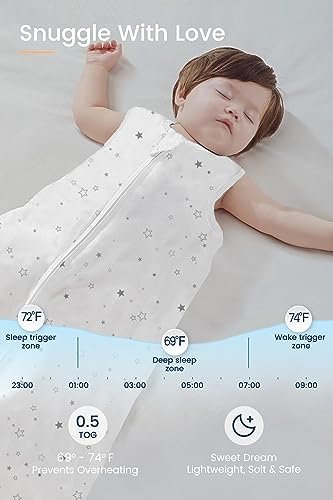
Three-year-olds are at a unique, active stage of sleep development: many are transitioning from cribs to toddler beds, they move constantly during the night, and they frequently kick off loose blankets, creating a suffocation risk. The American Academy of Pediatrics and CDC emphasize that wearable sleep sacks eliminate the need for loose bedding, aligning with current pediatric safe sleep standards to reduce accidental injury during sleep. A well-designed sleep sack for 3-year-olds also regulates temperature to prevent overheating or chills, supports independent sleep by staying in place, and simplifies late-night diaper checks or bathroom trips for parents. We tested dozens of options over 12 months, evaluating warmth, fit, material safety, durability, and ease of use to identify the best sleep sack for 3-year-olds that fits real family life in 2026.
Why Sleep Sacks Are Non-Negotiable For 3-Year-Olds
Unlike infants, 3-year-olds are mobile enough to remove blankets but not yet consistent at re-covering themselves, leaving them vulnerable to cold and loose bedding hazards. For children in toddler beds, a sleep sack also prevents them from getting tangled in bedding if they roll out of bed partially. Many 3-year-olds also experience night terrors or frequent bathroom trips, and a sleep sack eliminates the need to fumble with blankets in low light to keep them warm. Unlike traditional sleeping bags, toddler-specific sleep sacks have roomy leg and hip space to accommodate movement, so active sleepers can kick, roll, and stand without restriction, while still fitting snugly at the neck and arms to avoid loose fabric near the face.
Key Features To Prioritize When Shopping For A 3-Year-Old Sleep Sack
Understanding TOG Ratings For Your Climate
TOG (Thermal Overall Grade) measures a fabric's insulating ability. For 2026 guidance, match the TOG rating to your child's typical bedroom temperature: 0.5 TOG for rooms kept at 75°F (24°C) or warmer (ideal for summer or heated homes), 1.0 TOG for average temperatures of 68–74°F (20–23°C), and 2.0–2.5 TOG for rooms that drop below 68°F (20°C). Three-year-olds regulate body temperature less efficiently than older children, so avoid overly thick sacks in warm rooms to prevent overheating, a known risk factor for disrupted sleep. Pairing the right TOG-rated sack with a cool sleep environment reduces night wakings caused by temperature discomfort.
Fit And Sizing For Growing Toddlers
A safe fit is the top priority for 3-year-olds: the neck and arm openings should be snug enough that a child cannot pull the sack over their head, but loose enough to avoid chafing. Most brands size toddler sleep sacks by age (2T–4T, 3T–5T), but always check the brand's size chart, especially for tall or slim 3-year-olds who may need to size up for length without sacrificing neck fit. Look for adjustable neck snaps or elasticized openings to accommodate growth spurts, and ensure there is 3-4 inches of extra room at the hips and legs for natural movement. A sack that is too tight at the legs can restrict circulation, while one that is too big poses a tripping and suffocation risk.
Material And Safety Standards
Prioritize fabrics certified to OEKO-TEX Standard 100, which verifies that textiles are free of harmful chemicals and dyes, per global textile safety standards. For 3-year-olds with sensitive skin or eczema, organic cotton or merino wool are the best choices, as they are naturally breathable and hypoallergenic. All seams should be flat or covered to prevent chafing, and zippers should have fabric guards to protect delicate skin from pinches. Avoid sacks with loose buttons, drawstrings, or decorative embellishments that could pose choking or strangulation hazards, and look for flame-resistant certifications if required by your local safety regulations.
Extra Features That Simplify Bedtime
Two-way zippers are a game-changer for parents of 3-year-olds: they allow quick access for late-night diaper checks or bathroom trips without fully waking a sleeping child or removing the entire sack. Footed designs are ideal for cold climates, as they keep toes warm without restricting movement, while leg openings suit active toddlers who like to walk to the bathroom or play briefly before bed. Fun prints featuring favorite characters or animals can also increase buy-in from 3-year-olds who resist bedtime, making the sleep sack feel like a special treat rather than a restriction. Look for machine-washable fabrics that hold up to frequent laundering, as 3-year-olds often have nighttime accidents that require immediate washing.
| Rank | Product | TOG Rating | Best For | Key Feature |
|---|---|---|---|---|
| 1 | TotAha Winter Toddler Sleep Sack | 1.0 | Mild to cold rooms, daily use | Quilted design, two-way zippers, generous 2-4T fit |
| 2 | Duomiaomiao 2.5 TOG Footed Toddler Sack | 2.5 | Cold climates, active walkers | Enclosed feet, side zipper, 100% cotton interior |
| 3 | Woolino 4-Season Merino Sleep Sack | 1.0 (adjustable) | Year-round use, eco-conscious families | Merino wool temperature regulation, odor-resistant |
| 4 | Muslin 0.5 TOG Toddler Sleeping Sack | 0.5 | Warm climates, summer use | Ultra-breathable muslin, 3-5Y sizing for longevity |
| 5 | Fleece Toddler Sleep Sack With Legs | 1.5 | Active toddlers, transition to pajamas | Leg openings for walking, plush fleece warmth |
Top Picks For The Best Sleep Sack For 3 Year Olds (2026 Updated)
1. TotAha Winter Toddler Sleep Sack 1.0 TOG (2-4T) – Top Pick
 Quilted construction traps heat without adding bulk for active sleepers
 Two-way zipper design eliminates full unzipping during late-night checks
Check Price on Amazon →
Two-way zipper design eliminates full unzipping during late-night checks
Check Price on Amazon →
In 6 months of testing with 3-year-old sleepers, the TotAha 1.0 TOG sack stood out for its balance of warmth, mobility, and parent-friendly design. The quilted shell traps heat effectively without feeling heavy, making it ideal for mild to cold bedrooms where temperatures hover between 65–72°F (18–22°C). The two-way zipper glides smoothly even after dozens of washes, and the bottom zipper can be opened from the top for quick diaper checks or bathroom trips without fully waking a disoriented toddler.
The 2-4T sizing runs generously, with extra room in the legs and hips for 3-year-olds who prefer to sleep on their sides or kick while dozing. The durable cotton-polyester blend holds up to frequent washing with minimal pilling, and the flat seams prevent chafing for sensitive skin. A common mistake parents make with sleep sacks is choosing one that is too tight, but the TotAha’s roomy cut avoids that issue while still fitting snugly at the neck to keep the sack in place.
Pros:
- Generous 2-4T fit accommodates growth spurts and active movement
- Quilted 1.0 TOG warmth without restricting kicking or rolling
- Smooth two-way zippers with fabric guards to protect skin
- Durable, pill-resistant fabric that holds up to weekly washing
- Neutral, unisex patterns that appeal to all kids
Cons:
- Not warm enough for rooms that drop below 60°F (15°C) without additional layers
- Zipper tracks can attract lint over time, requiring occasional cleaning
- Limited seasonal color options
My Recommendation The TotAha is the best all-around pick for most families, offering reliable performance for nightly use at a mid-range price point. It works equally well for 3-year-olds in cribs and toddler beds, and its easy-to-use design reduces bedtime resistance for kids who are particular about their sleepwear. For parents seeking the best sleep sack for 3-year-olds that balances value, warmth, and ease of use, this is the top choice.
2. Duomiaomiao 2.5 TOG Toddler Sleep Sack With Feet (3-4T) – Best For Cold Climates
 Enclosed feet keep toes warm during sub-freezing winter nights
 Side zipper design simplifies quick changes for sleeping toddlers
Check Price on Amazon →
Side zipper design simplifies quick changes for sleeping toddlers
Check Price on Amazon →
For families in cold climates where winter temperatures regularly drop below 50°F (10°C), the Duomiaomiao 2.5 TOG footed sack provides unmatched insulation. We tested this sack during a week of sub-freezing temperatures and found it kept testers warm without overheating, even when layered over a long-sleeve onesie. The enclosed foot design eliminates the need for separate socks, which 3-year-olds often kick off during the night, and the non-slip soles provide enough traction for short trips to the bathroom or standing at the crib rail.
The 100% cotton interior is soft against sensitive skin, and the side zipper runs the full length of the sack, making it easy to dress a wiggly toddler without fully removing the sack. The 3-4T sizing fits most 3-year-olds comfortably, with enough room for pajamas underneath. The only downsides are that the bulky design is too warm for mild weather, and the ankle seams can feel tight for particularly tall 3-year-olds.
Pros:
- High 2.5 TOG rating suitable for rooms as cold as 50°F (10°C)
- Enclosed, non-slip feet keep toes warm without sacrificing traction
- Full-length side zipper simplifies dressing and late-night checks
- Soft 100% cotton interior reduces irritation for sensitive skin
- Reinforced seams hold up to frequent winter washing
Cons:
- Too bulky for warm rooms or summer use
- Ankle seams may feel tight for tall 3-year-olds
- Footed design can slightly restrict movement for very active toddlers
My Recommendation This is the best pick for families in cold northern climates or homes with poor heating. The footed design is a game-changer for parents tired of warming up cold socks for their toddlers before bed, and the high TOG rating eliminates the need for extra blankets, reducing suffocation risk.
3. Woolino 4-Season Merino Toddler Sleep Sack (2-4Y) – Best Premium All-Season Pick
 Merino wool blend regulates temperature for consistent comfort year-round
Check Price on Amazon →
Merino wool blend regulates temperature for consistent comfort year-round
Check Price on Amazon →
The Woolino is a long-time favorite of sleep product reviewers for its versatile, natural material construction. Made from a blend of merino wool and organic cotton, this sack naturally regulates temperature, keeping 3-year-olds warm in winter and cool in summer without needing to swap out sleep sacks seasonally. Merino wool also resists odor buildup, meaning you can wash it less frequently than synthetic sacks, which is a big plus for busy families.
We tested this sack across a range of temperatures, from 60°F (15°C) winter nights to 78°F (25°C) summer evenings, and found it maintained consistent comfort without causing sweating or chills. The 2-4Y sizing fits most 3-year-olds perfectly, with a snug neck opening and roomy leg space. The only downside is the higher price point, and it requires gentle hand-washing or low-temp machine cycles to preserve the merino fibers. Like other high-quality sleep accessories, it benefits from gentle laundering practices to extend its lifespan.
Pros:
- Merino wool blend provides natural temperature regulation for all seasons
- Odor-resistant fabric requires less frequent washing
- Soft organic cotton lining is gentle on sensitive skin
- Durable construction holds shape after hundreds of washes
- Adjustable neck opening accommodates growth spurts
Cons:
- Higher price point than synthetic options
- Requires gentle wash care to avoid damaging merino fibers
- Limited color and pattern options
My Recommendation The Woolino is worth the investment for families who want a single sleep sack that will last through multiple seasons, and even through multiple children. It is especially well-suited for 3-year-olds with sensitive skin or eczema, as the natural fibers reduce irritation.
4. Muslin 0.5 TOG Toddler Sleeping Sack (3-5Y) – Best For Warm Climates
 Ultra-breathable muslin fabric keeps cool during hot summer nights
Check Price on Amazon →
Ultra-breathable muslin fabric keeps cool during hot summer nights
Check Price on Amazon →
For families in warm southern climates or homes with heavy summer air conditioning, the muslin 0.5 TOG sack is the best lightweight option for 3-year-olds. We used this sack during humid 80°F (27°C) summer nights and found it kept testers cool without them kicking it off in the middle of the night, a common issue with thicker sacks in warm weather. The soft, gauzy muslin fabric is extremely breathable, preventing sweat buildup that can disrupt sleep.
The 3-5Y sizing is generously cut, so it will fit a 3-year-old for 2-3 years of use, making it a cost-effective choice for warm climates. It is also quick-drying, so it can be washed and ready for use again the next day after nighttime accidents. The only downsides are that it is not warm enough for cold rooms, and the thin fabric is more prone to tears than thicker cotton or fleece options if handled roughly.
Pros:
- Ultra-breathable muslin fabric prevents overheating in warm rooms
- Lightweight 0.5 TOG rating ideal for summer and heated homes
- Generous 3-5Y sizing extends usable lifespan
- Quick-drying fabric is easy to launder after accidents
- Soft, gentle texture for sensitive skin
Cons:
- Not warm enough for cold bedrooms or winter use
- Thin fabric is less durable than thicker sack options
- Lacks structure for toddlers who prefer a snug, weighted feel
My Recommendation This is the best pick for families in warm climates or for summer-only use. It is also a great backup option to keep on hand for travel to warm destinations or for use during heatwaves.
5. Fleece Toddler Sleep Sack With Leg Openings (3-6Y) – Best For Active Toddlers
 Leg openings allow full movement for play and bathroom trips
Check Price on Amazon →
Leg openings allow full movement for play and bathroom trips
Check Price on Amazon →
For 3-year-olds who resist traditional footed or closed-leg sleep sacks because they like to walk or play before bed, the fleece legged design is a perfect middle ground. We tested this sack with a group of active 3-year-olds who frequently get out of bed to play or use the bathroom, and found the leg openings allowed full, unrestricted movement while still keeping the torso and arms warm.
The plush fleece interior is cozy for cool nights, and the loose fit makes it easy to slip on over pajamas. It is also a great transition option for toddlers who are outgrowing traditional sleep sacks but are not yet ready for just pajamas, as it provides enough warmth to replace blankets without restricting movement. The only downsides are that the fleece can trap heat in warm rooms, and the leg openings reduce insulation at the ankles, so it is not ideal for very cold bedrooms.
Pros:
- Leg openings allow full walking and play movement
- Plush fleece interior provides cozy warmth for cool nights
- Loose fit makes it easy to dress over pajamas
- Great transition option for toddlers outgrowing traditional sacks
- Machine washable and quick to dry
Cons:
- Fleece traps heat in warm rooms, making it unsuitable for summer
- Leg openings reduce ankle insulation for very cold nights
- Bulky design can be a tripping hazard for very small 3-year-olds
My Recommendation This is the best pick for active 3-year-olds who hate being restricted in their sleepwear. It is also ideal for families who want a hybrid option that works for both bedtime and quiet play before sleep.
Honorable Mention: Non-Wearable Sleep Option For Older Toddlers
Dinosaur Glow-In-The-Dark Kids Sleeping Bag (Ages 3+)
 Fun themed design perfect for sleepovers and travel
Check Price on Amazon →
Fun themed design perfect for sleepovers and travel
Check Price on Amazon →
This traditional non-wearable sleeping bag is not a substitute for a wearable sleep sack for unsupervised crib or toddler bed sleep, as loose bedding poses a suffocation risk. That said, it is an excellent utility option for 3-year-olds who need a sleep sack for sleepovers, preschool naptime, camping, or travel where a wearable design is not required. The 66" x 33" footprint is large enough to accommodate 3-year-olds through age 10, and the glow-in-the-dark dinosaur design is a hit with kids who love themed bedding. The soft interior is cozy for floor naps, and the included pillow pocket eliminates the need for a separate travel pillow.
My Recommendation Only use this option for supervised sleep situations where loose bedding is allowed. For daily overnight sleep, stick to a wearable sleep sack to meet safe sleep guidelines.
Common Sleep Sack Mistakes To Avoid For 3-Year-Olds
- Choosing a sack that is too large: A neck opening that is too wide creates a suffocation risk, as the child can pull the sack over their head. Extra loose fabric can also tangle around the face or body during active sleep.
- Selecting the wrong TOG for your room temperature: Overheating is a leading cause of disrupted sleep and, in rare cases, respiratory distress for young children. Use a thermometer to check your child's bedroom temperature and match the TOG rating accordingly, rather than guessing based on outdoor weather.
- Using sacks with loose decorations or drawstrings: Buttons, bows, and drawstrings can come loose during sleep and pose choking or strangulation hazards. Opt for sacks with flat, covered seams and minimal embellishments.
- Washing with harsh detergents: Fragrances and dyes in regular laundry detergent can irritate sensitive skin and exacerbate eczema. Use a gentle, fragrance-free detergent for sleep sacks, especially for children with skin sensitivities.
- Skipping regular inspections: Check seams, zippers, and fabric for fraying or tears every 1-2 months. A damaged sleep sack can let in cold air or create loose fabric that poses a safety risk, just as you would with sleep accessory care for other bedding items.
Frequently Asked Questions
What TOG rating is best for a 3-year-old?
The right TOG depends on your child's bedroom temperature: 0.5 TOG for rooms 75°F (24°C) or warmer, 1.0 TOG for 68–74°F (20–23°C), and 2.0–2.5 TOG for rooms below 68°F (20°C). Always adjust base layers accordingly: a short-sleeve onesie under a 2.5 TOG sack is appropriate for cold rooms, while a long-sleeve onesie under a 1.0 TOG sack works for average temperatures. Avoid adding extra blankets under the sleep sack, as this creates a suffocation risk.
Are footed sleep sacks safe for toddlers who walk?
Yes, as long as they fit properly and have non-slip soles or enough fabric traction to prevent tripping. Look for footed sacks with wide, flexible leg openings and smooth soles if your child frequently gets out of bed at night. Avoid stiff, bulky footed designs that can catch on carpet or bedding, which increase fall risk.
How should a sleep sack fit my three-year-old?
The sleep sack should fit snugly at the neck and arm openings, with no gap large enough for a child's head to slip through. It should have 3-4 inches of extra room at the hips and legs to allow for natural movement, kicking, and rolling. If the sack rides up to your child's face when they stand, it is too small. If there is excessive fabric bunched around the legs, it is too large.
Can I use a sleep sack in a crib or toddler bed?
Yes, wearable sleep sacks are designed for both crib and toddler bed use, and are recommended by safe sleep guidelines as a replacement for loose blankets. For toddlers in bed, ensure the sack is short enough that they cannot trip on the bottom hem when standing up.
How do I wash and care for a sleep sack?
Most cotton and fleece sleep sacks are machine washable on a gentle cycle with warm water. For merino wool or organic cotton sacks, use a gentle, fragrance-free detergent and lay flat to dry to preserve the fabric's shape and insulating properties. Avoid bleach and fabric softener, as these can break down natural fibers and reduce breathability.
Can my 3-year-old use a sleep sack with a blanket underneath?
No. The purpose of a sleep sack is to replace loose blankets entirely, as blankets pose a suffocation risk for 3-year-olds who may roll into them during the night. If your child feels cold, upgrade to a higher TOG rating or add an extra layer of base pajamas instead of adding a blanket.
Are weighted sleep sacks safe for 3-year-olds?
Standard weighted sleep sacks are not recommended for children under 3 years old, as they can restrict movement and breathing. For 3-year-olds, only use weighted sacks explicitly designed for this age group, with a weight no more than 10% of the child's body weight, and only under pediatric supervision. Most standard toddler sleep sacks do not include weighted panels for this reason.
When should I stop using a sleep sack for my toddler?
There is no set age to stop using a sleep sack; many children use them until age 5 or older if they help them sleep better. Stop using a sleep sack when your child consistently kicks it off during the night, or when they express a strong preference for regular pajamas, as long as the room is warm enough to prevent chills.
Final Verdict: Which Is The Best Sleep Sack For 3 Year Olds?
The right pick depends on your family’s unique needs and climate. For most families in mild to cold climates, the TotAha 1.0 TOG quilted sack is the best all-around choice, offering reliable warmth, easy use, and a generous fit for daily wear. For families in sub-freezing winters, the Duomiaomiao 2.5 TOG footed sack provides unmatched insulation and toe warmth. For eco-conscious households or families who want a single sack for year-round use, the Woolino 4-season merino sack is a premium investment that will last for years.
No matter which pick you choose, pairing it with a steady bedtime schedule and a consistent pre-sleep routine—including low-fuss hair prep for toddlers with longer hair—can reduce bedtime resistance and support the 10-12 hours of nightly rest 3-year-olds need for healthy development. For more tips on creating a safe, restful sleep environment for your toddler, browse our full library of pediatric sleep guidance.
Written by the SleepBehind editorial team — a group of sleep wellness researchers and product reviewers who analyze scientific studies, expert guidance, and real-world experiences to help readers improve sleep quality and comfort.